CASE STUDY
Traditional underwriting treats a quote as a form and a submission as a queue. This work started there, as a Create a Quote journey built around coverage, rating, and identity, and turned into an orchestration model. AI evaluates confidence continuously, advances the file when it can, and hands the underwriter a named gap when it cannot.
The constraint was not another wizard step. It was a system that could hold an incomplete file, say why it was blocked, and keep working after a human touched it.
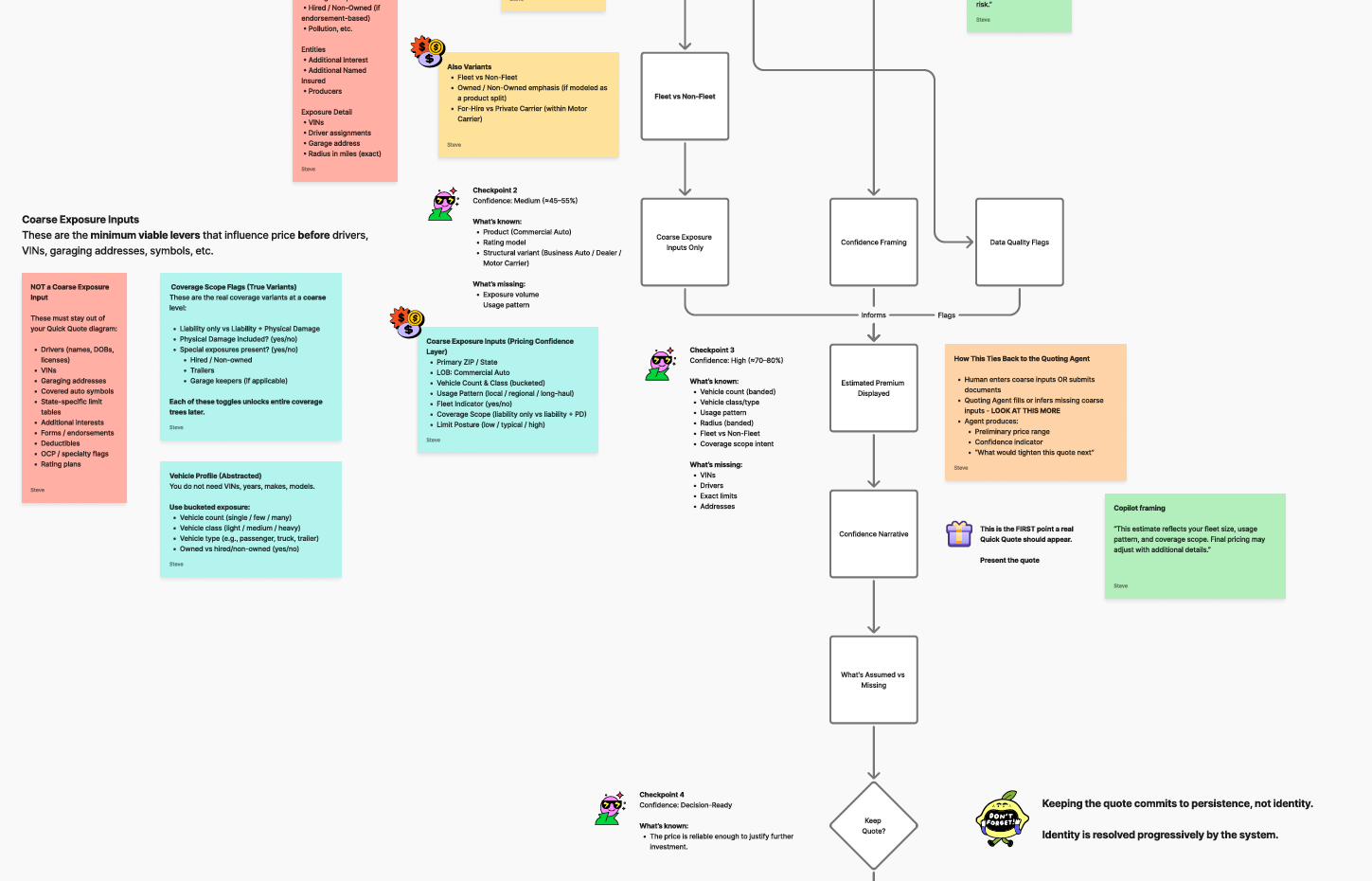
Every quote started as a Quick Quote and became Full only if the user kept it. Coverage variants defined the product and the rating. Identity was resolved by the system over the life of the quote, not as a form step.
That diagram was a thinking tool. It made three things obvious:
Speed depends on a thin default path, not a complete ACORD up front.
The product is the coverage shape, not the screen sequence.
Persistence and identity have to be system problems, or every later step re-asks who this is.
That held for a clean quote. It did not hold for incomplete inbound submissions, files already in flight, or human review that should not kill the workflow.
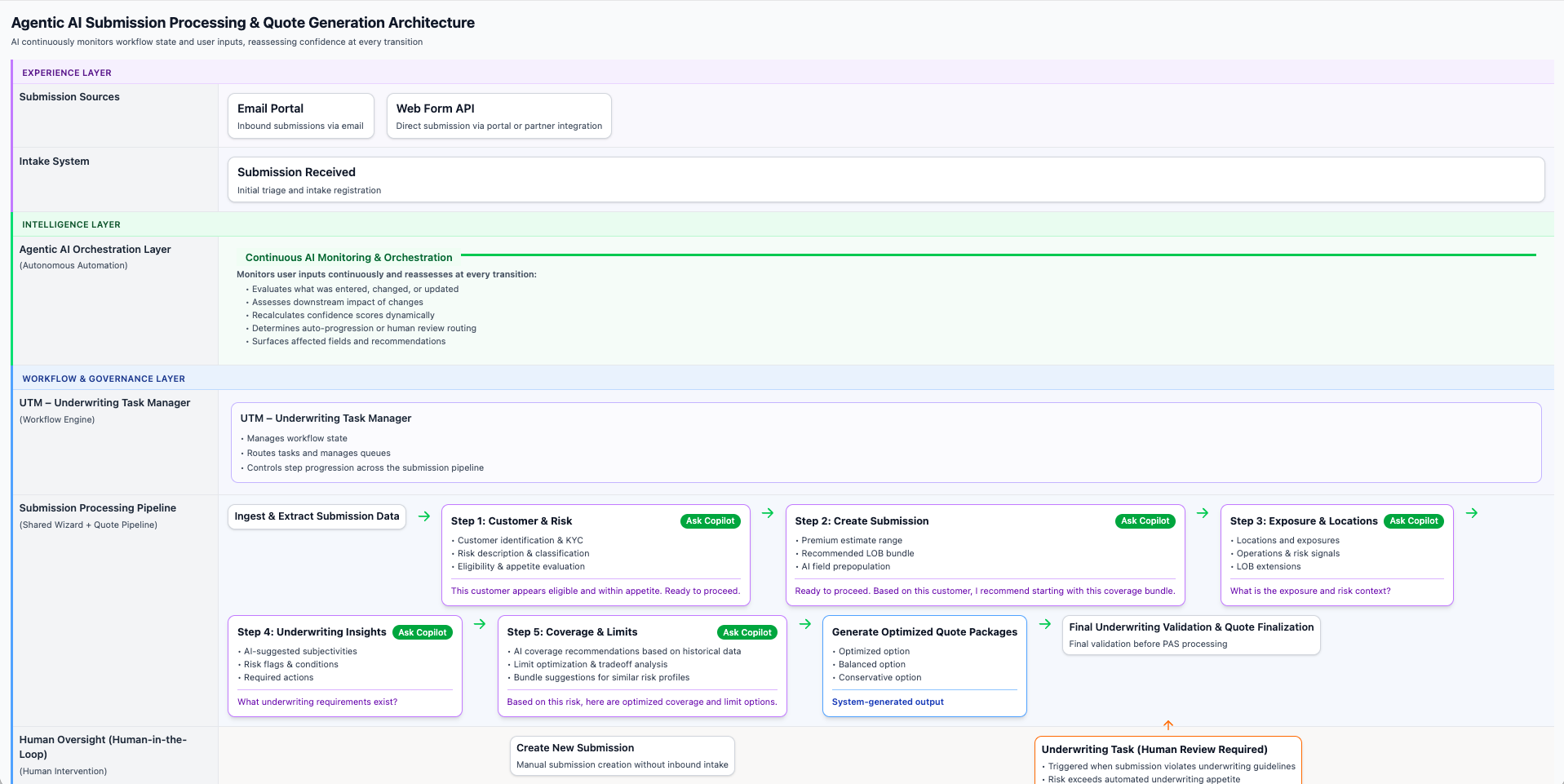
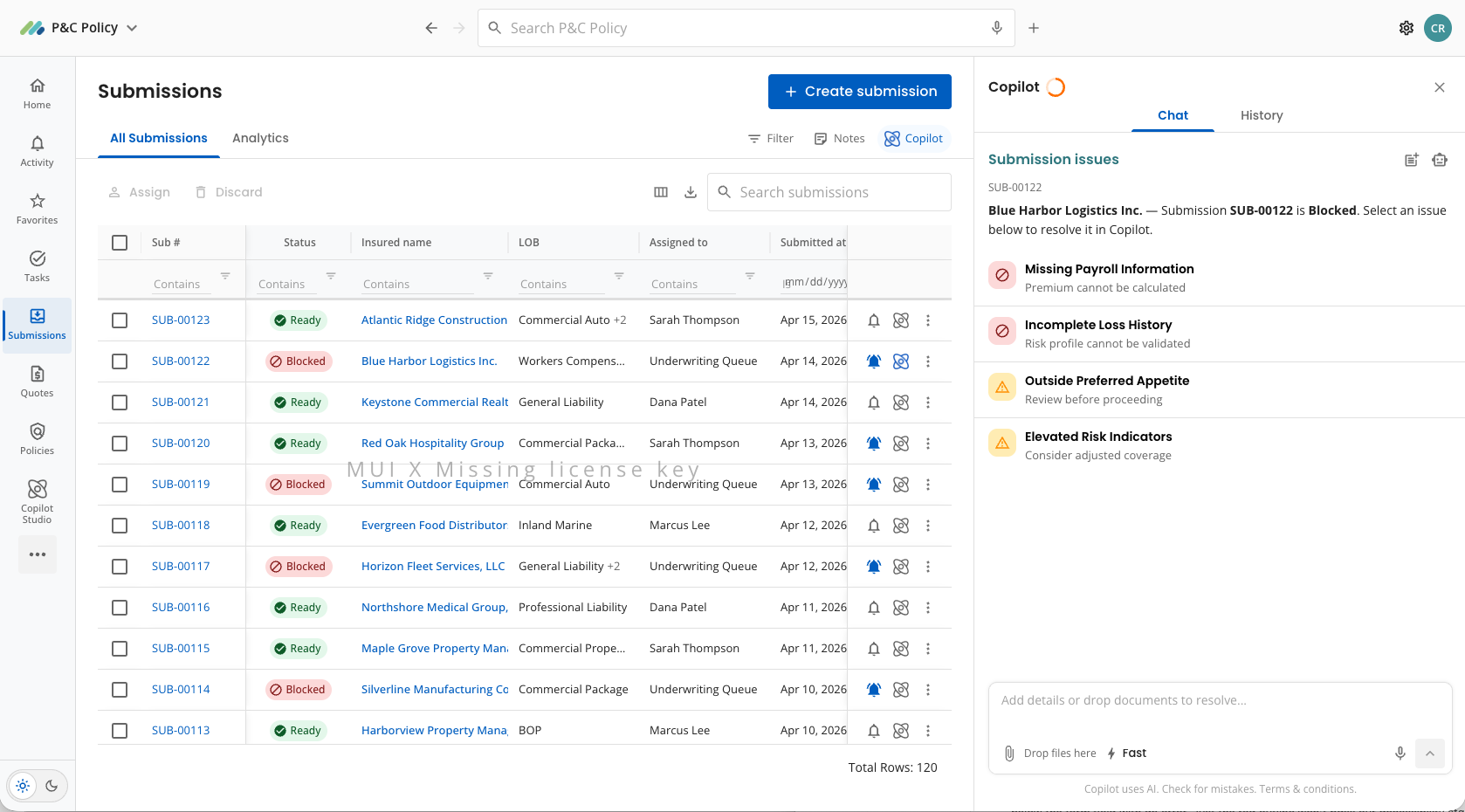
Intake, readiness, quoting, and referral had to sit on one orchestration loop. Copilot stopped being a sidebar helper and became the way the system named the next gap. The queue stopped being a list of records and became the place you can see which files the model can finish and which files need judgment.
Experience layer: Email, portal, and API land in one received state. The file exists before it is complete.
Intelligence layer: Evaluates what changed, the downstream effect, and whether confidence is high enough to auto-progress or route for review.
Workflow and governance: Task manager owns state and queues. Copilot sits on each pipeline step instead of after it.
Human oversight: Appetite breaks, missing data, and judgment become tasks in a parallel lane. They do not reset the file.
Core platform: Context, confidence, and workflow state sit above PAS. The experience does not call the admin system screen by screen.
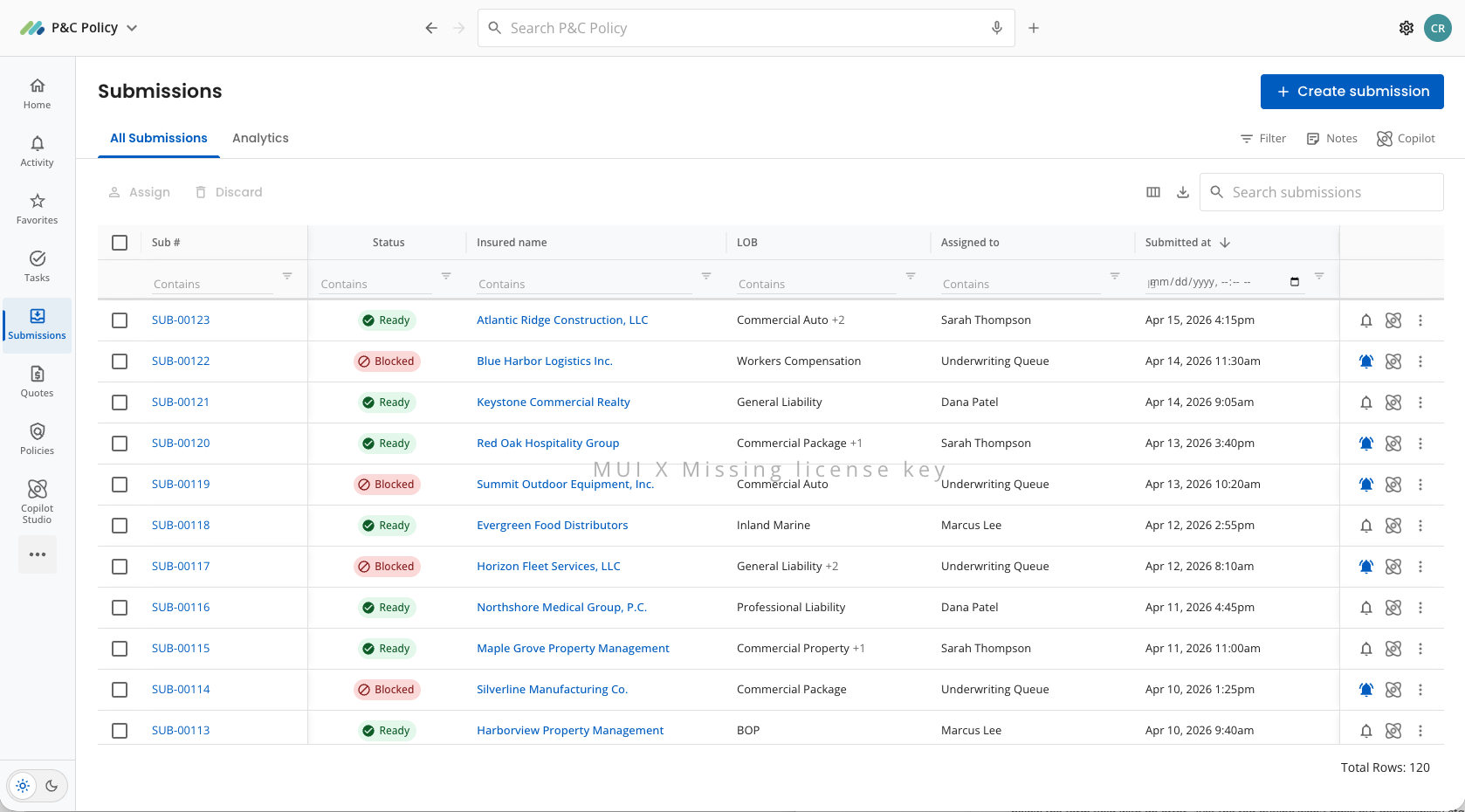
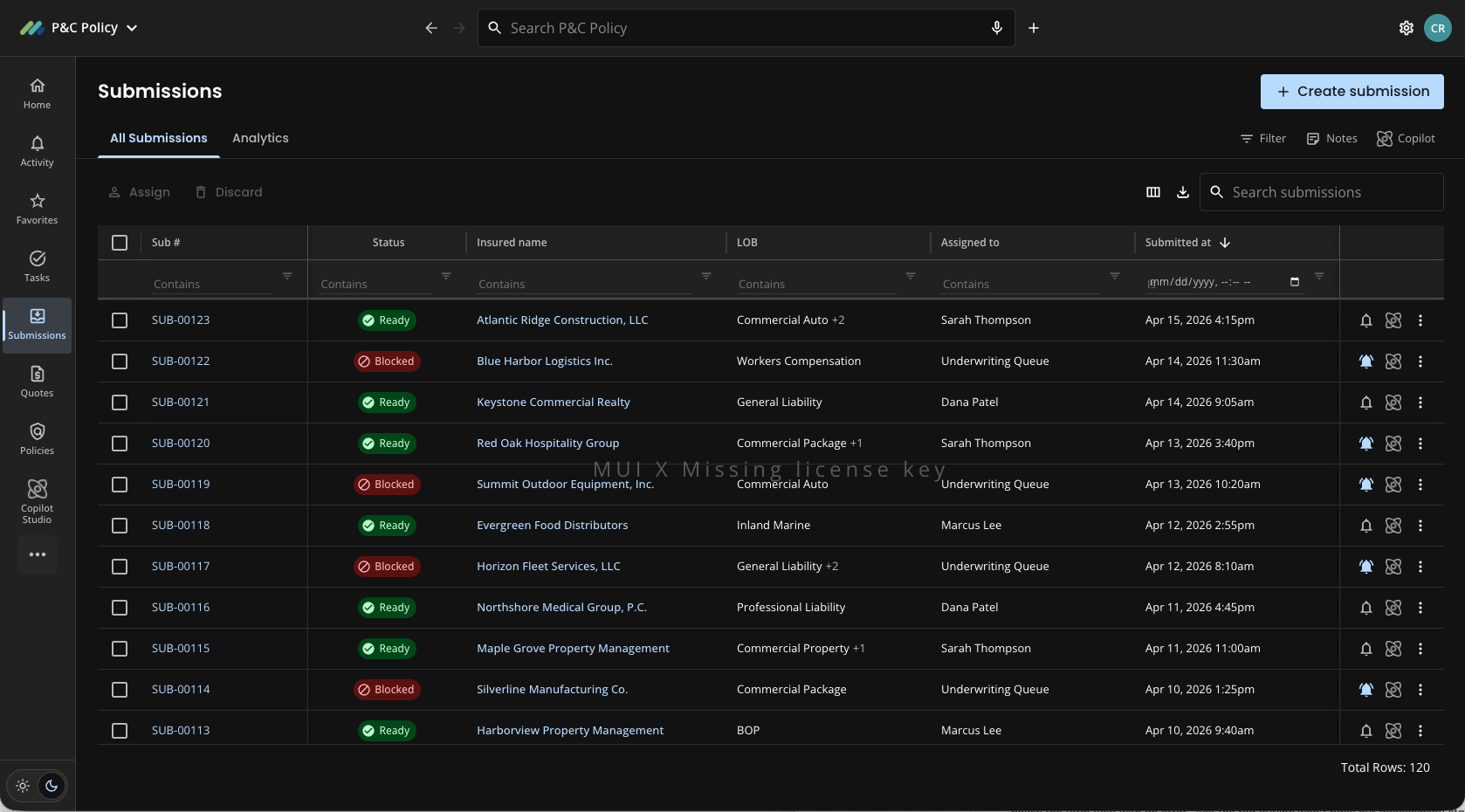
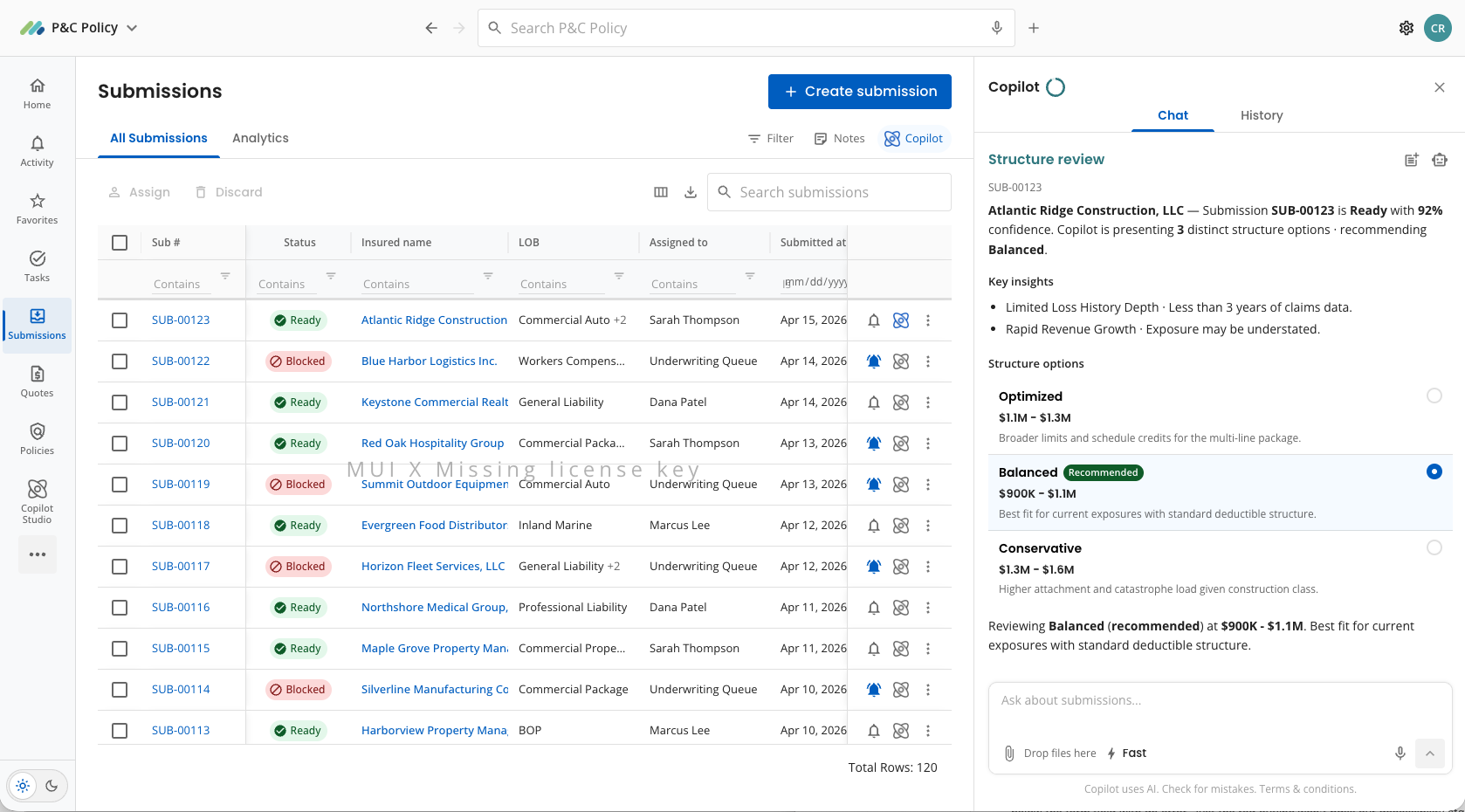
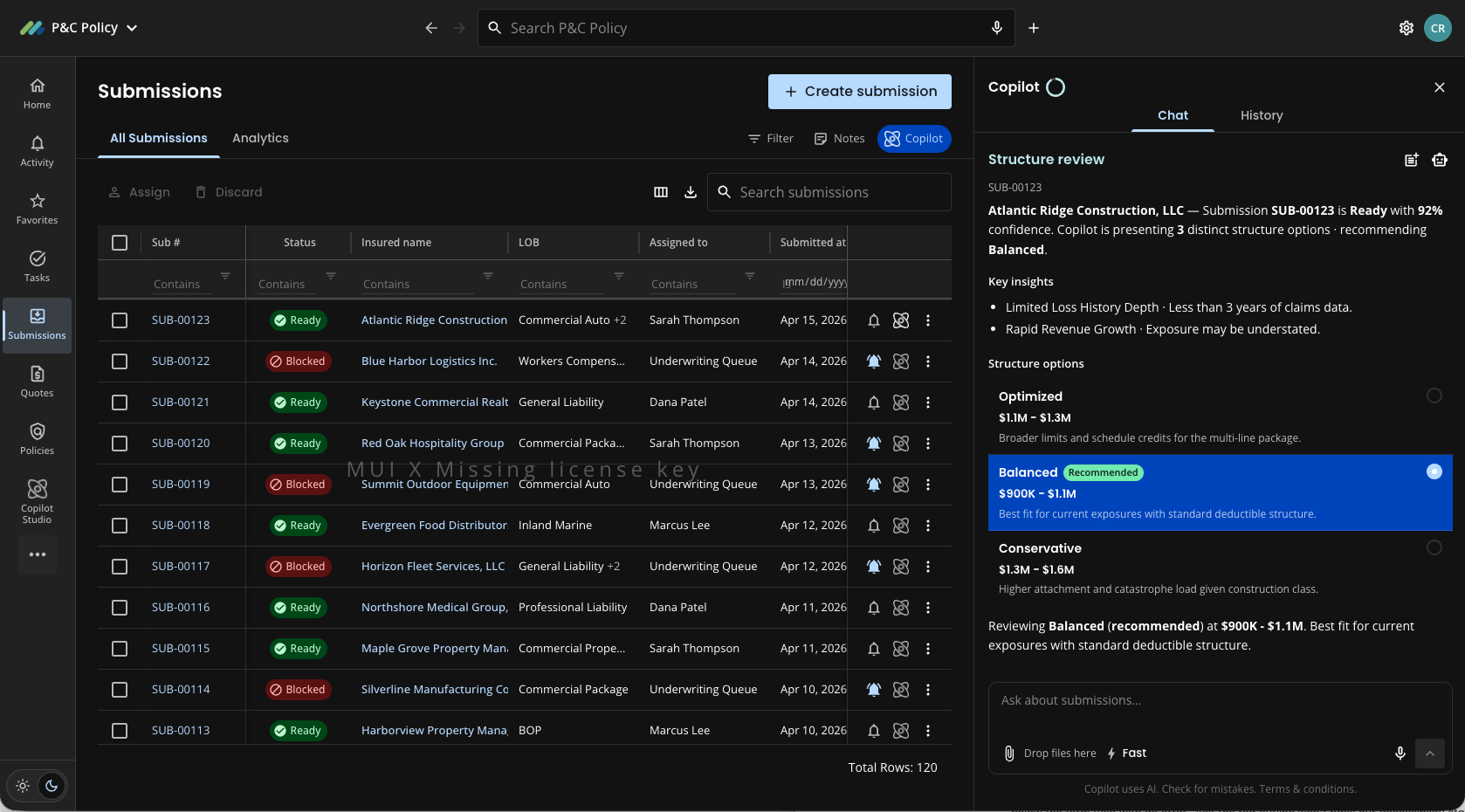
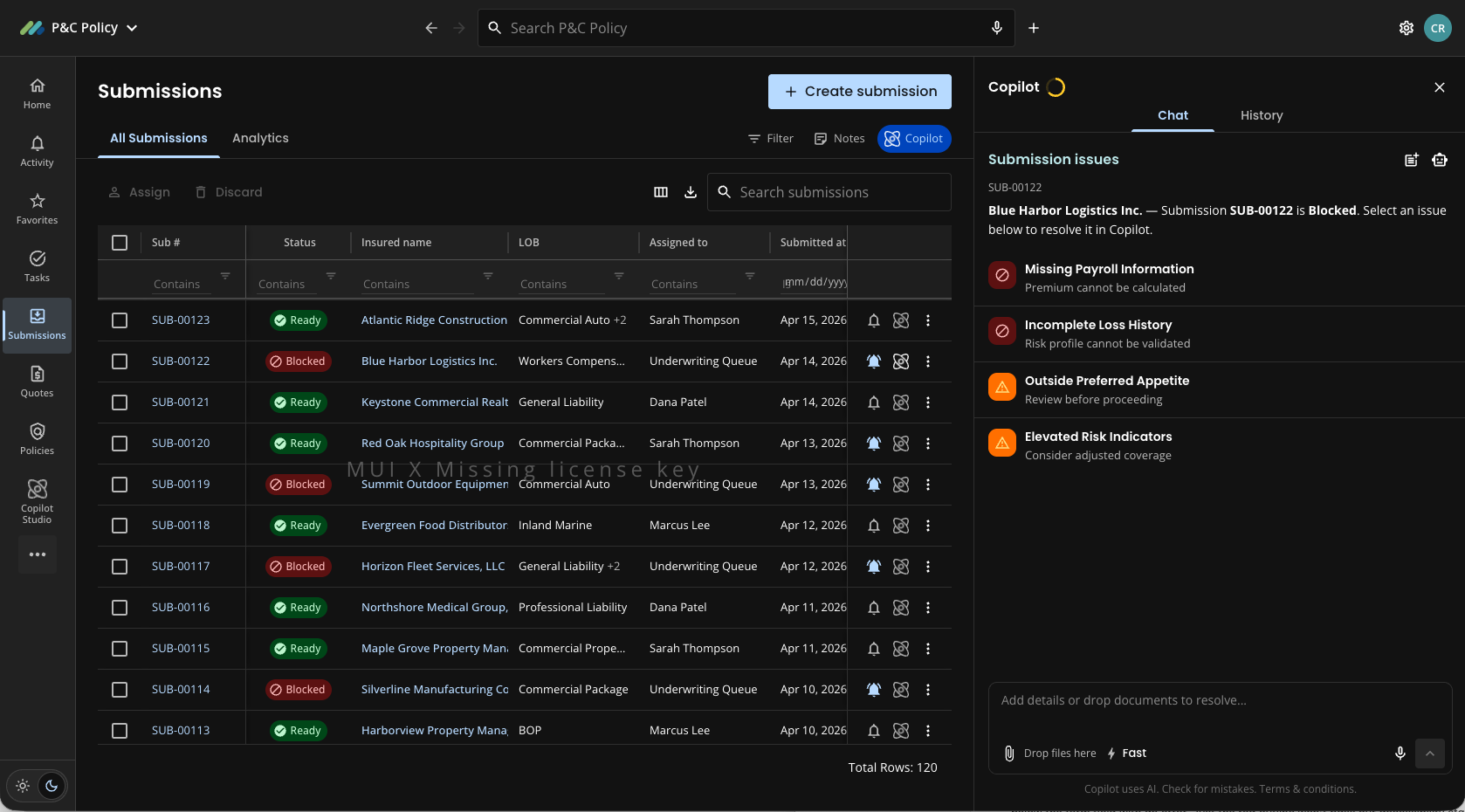
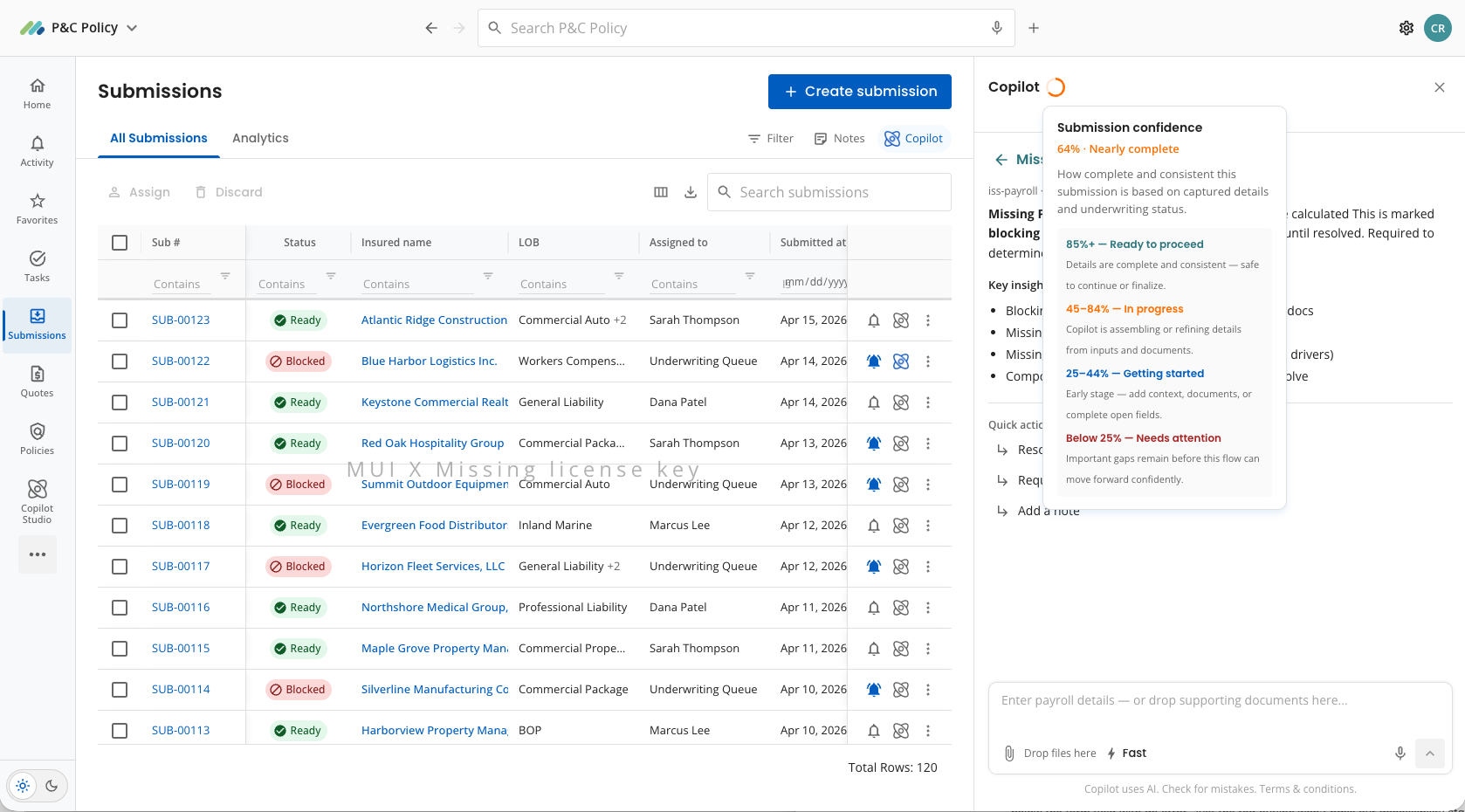
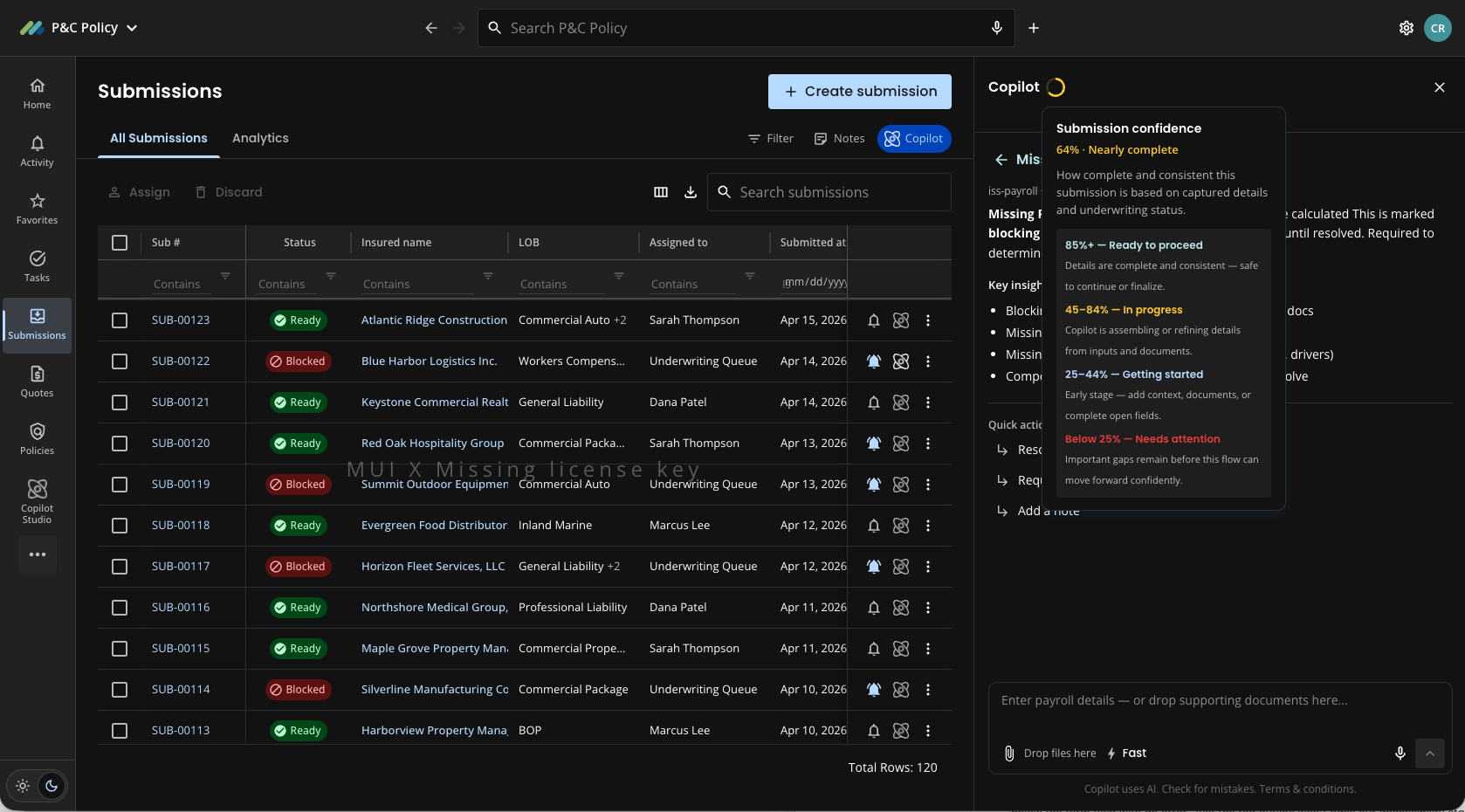
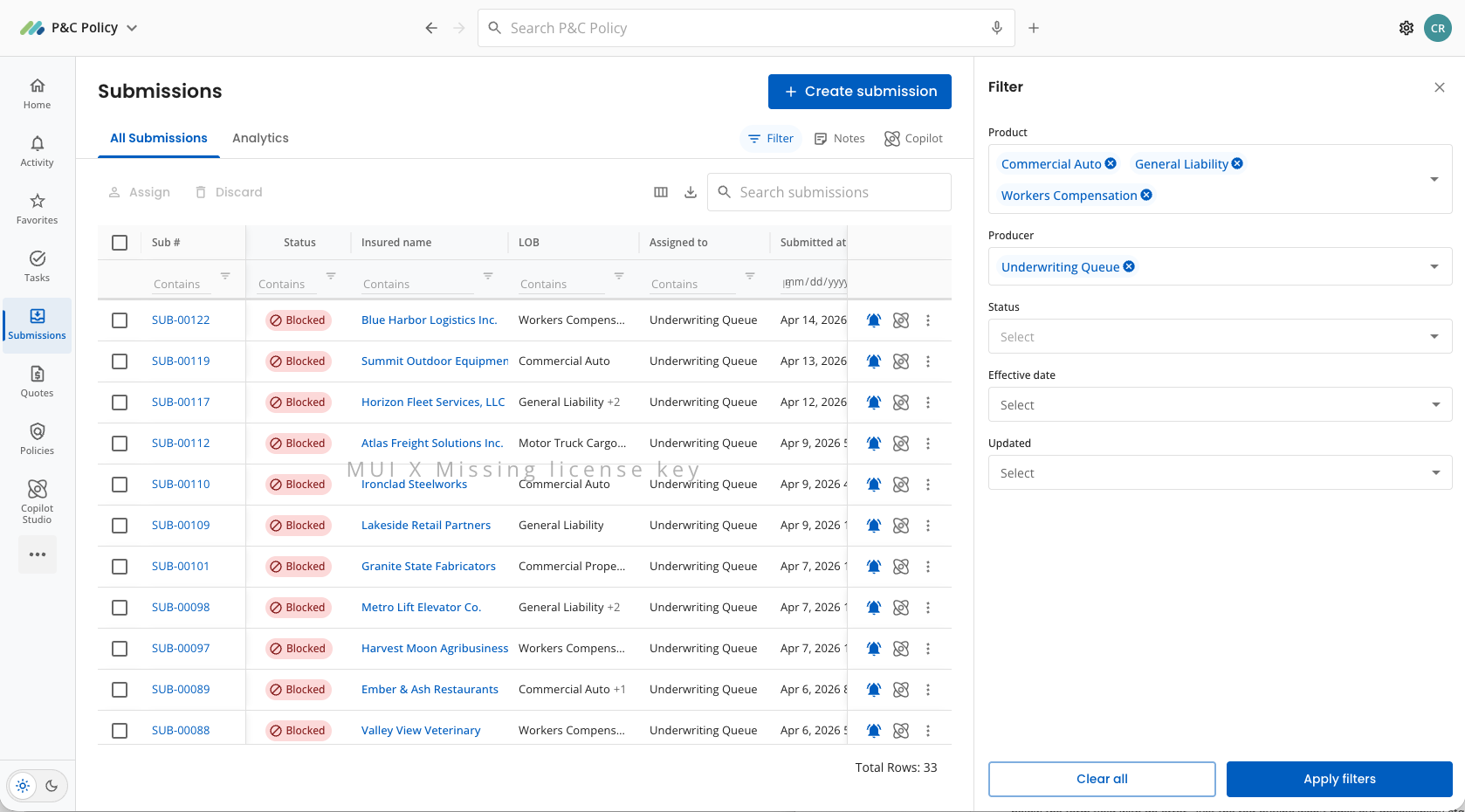
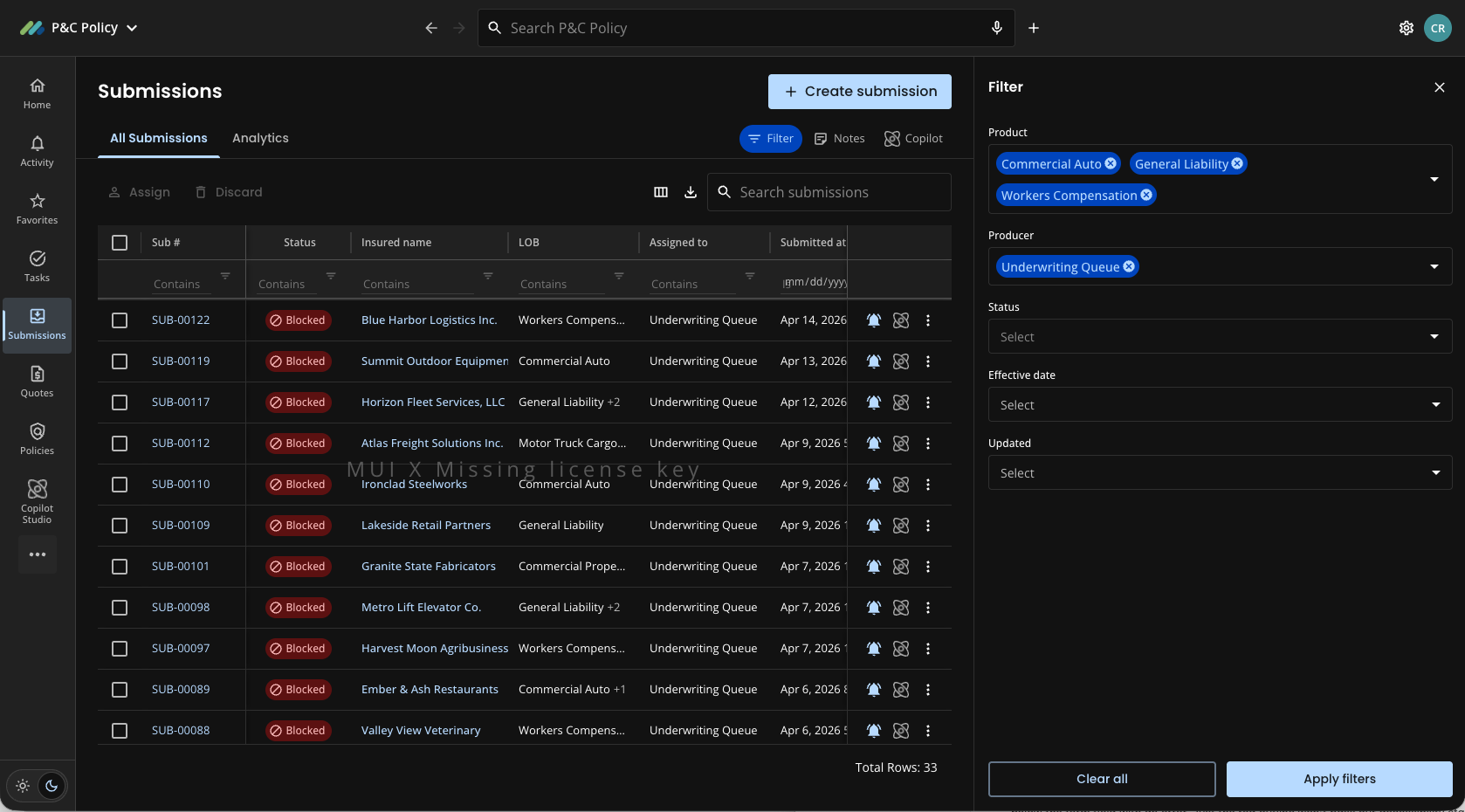
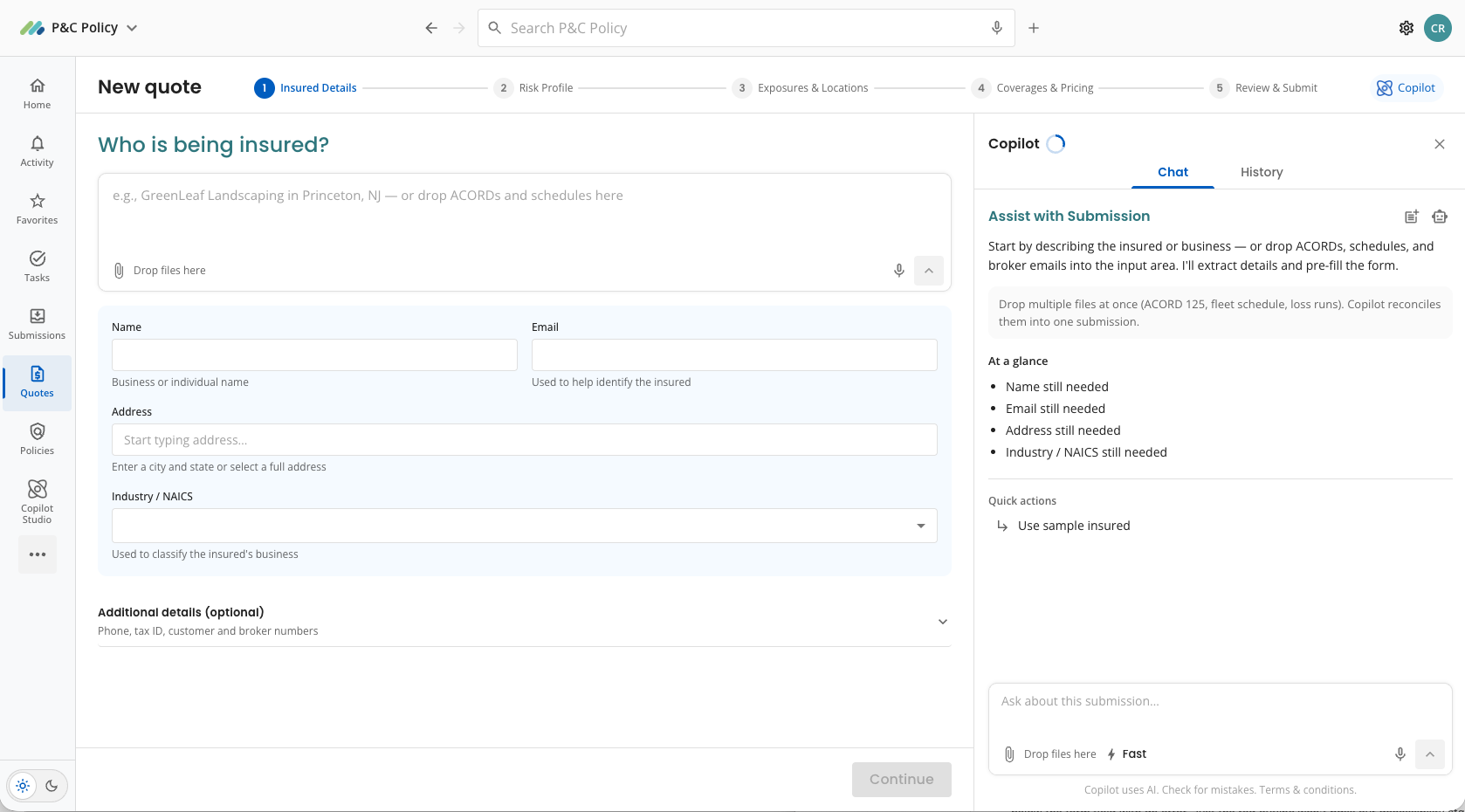
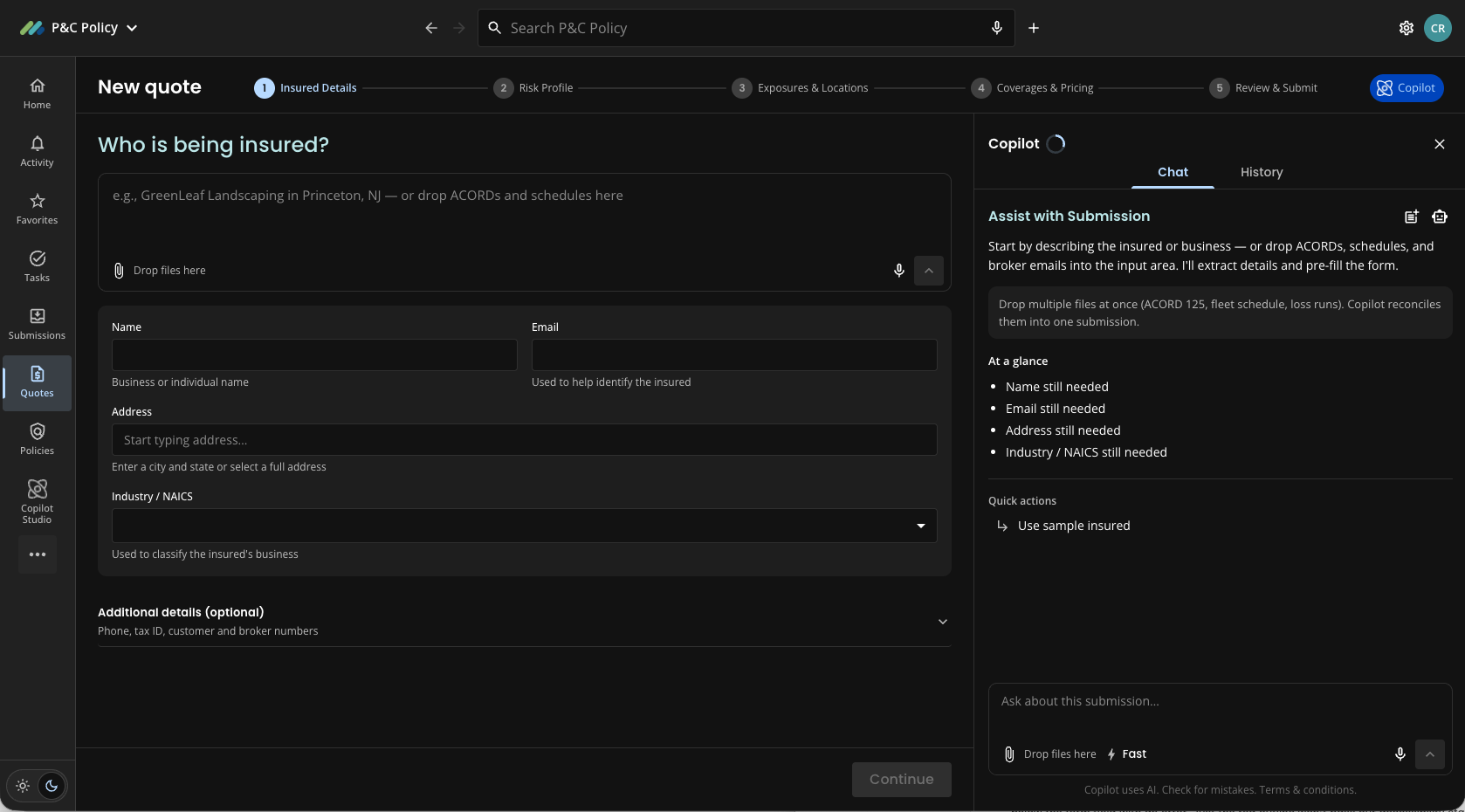
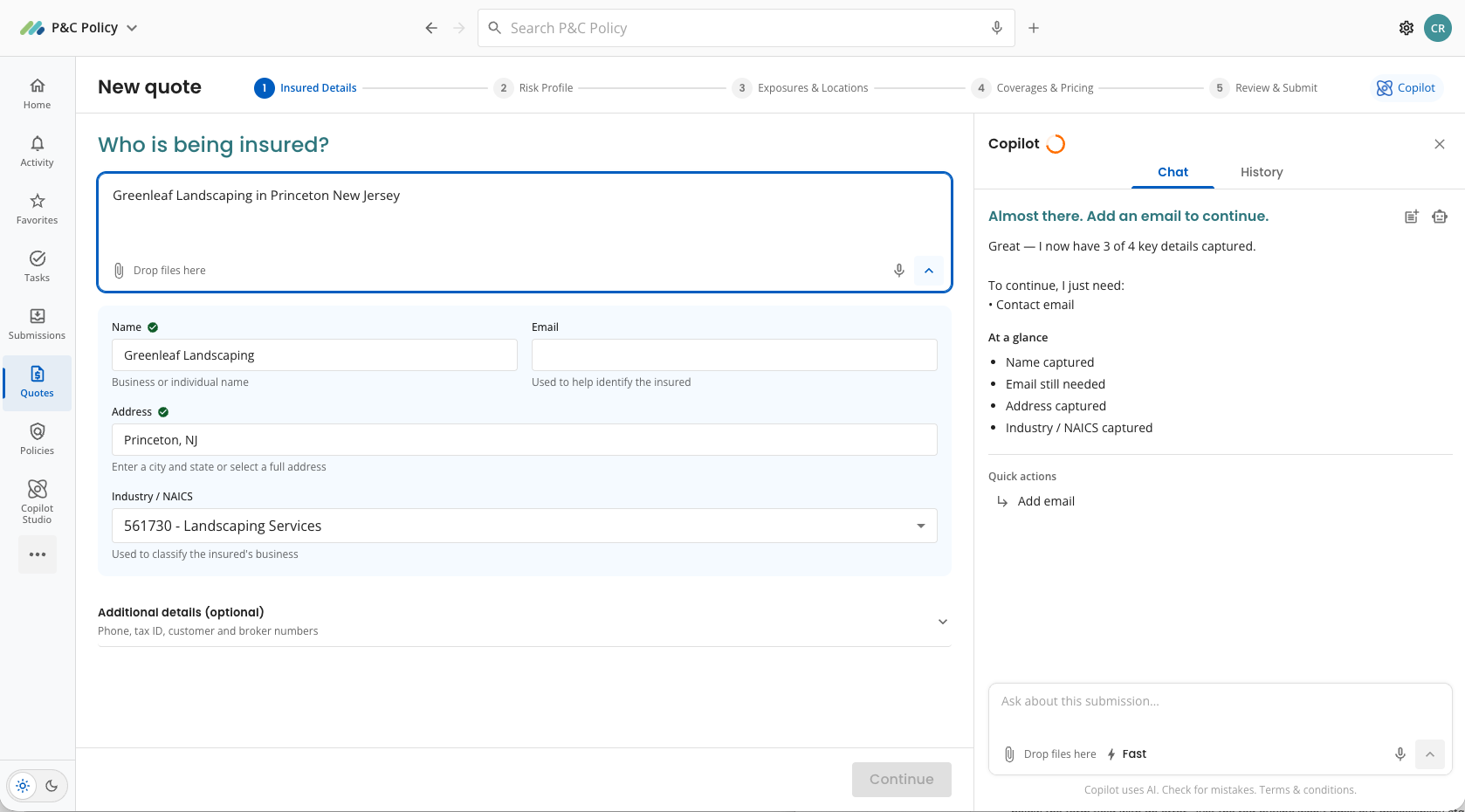
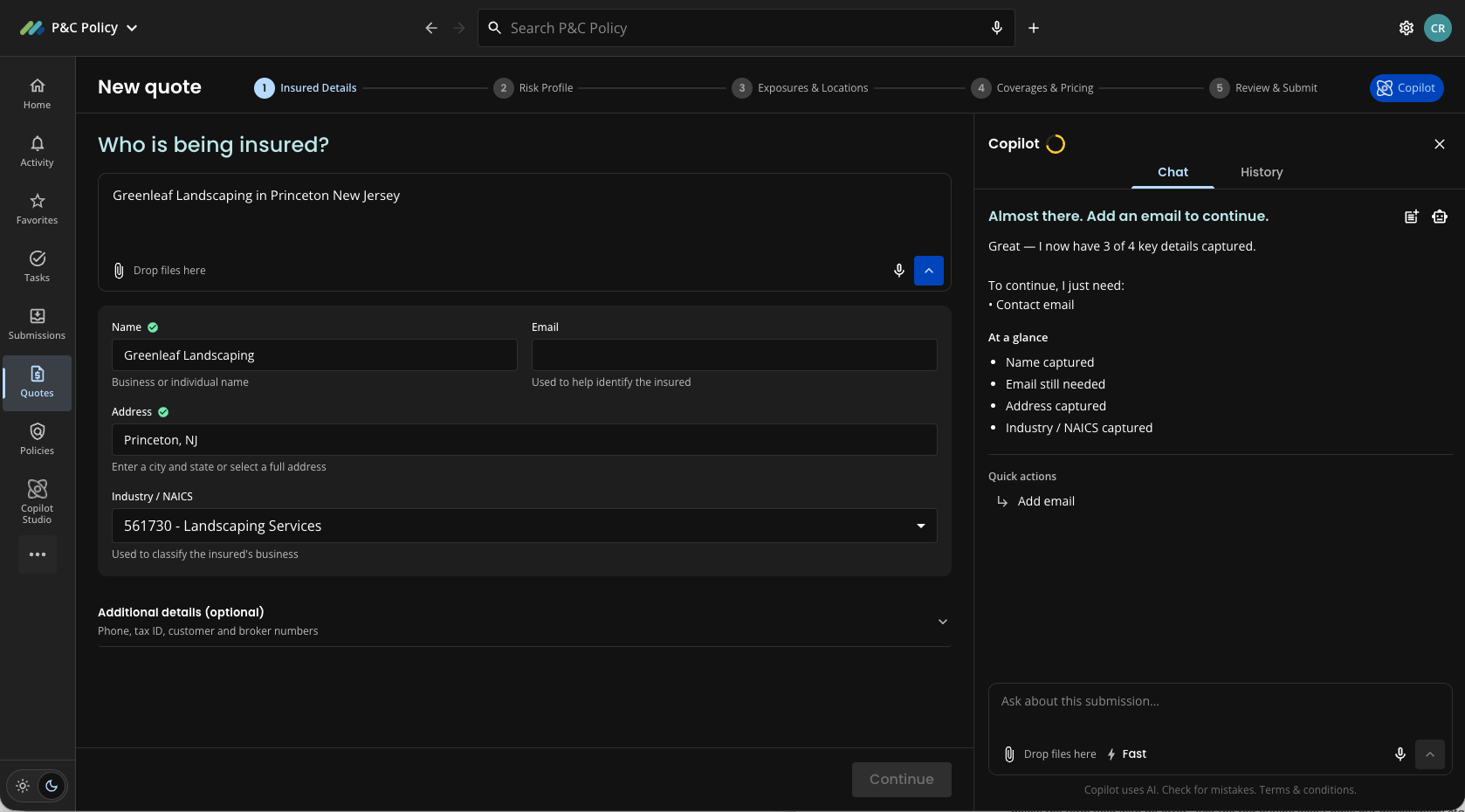
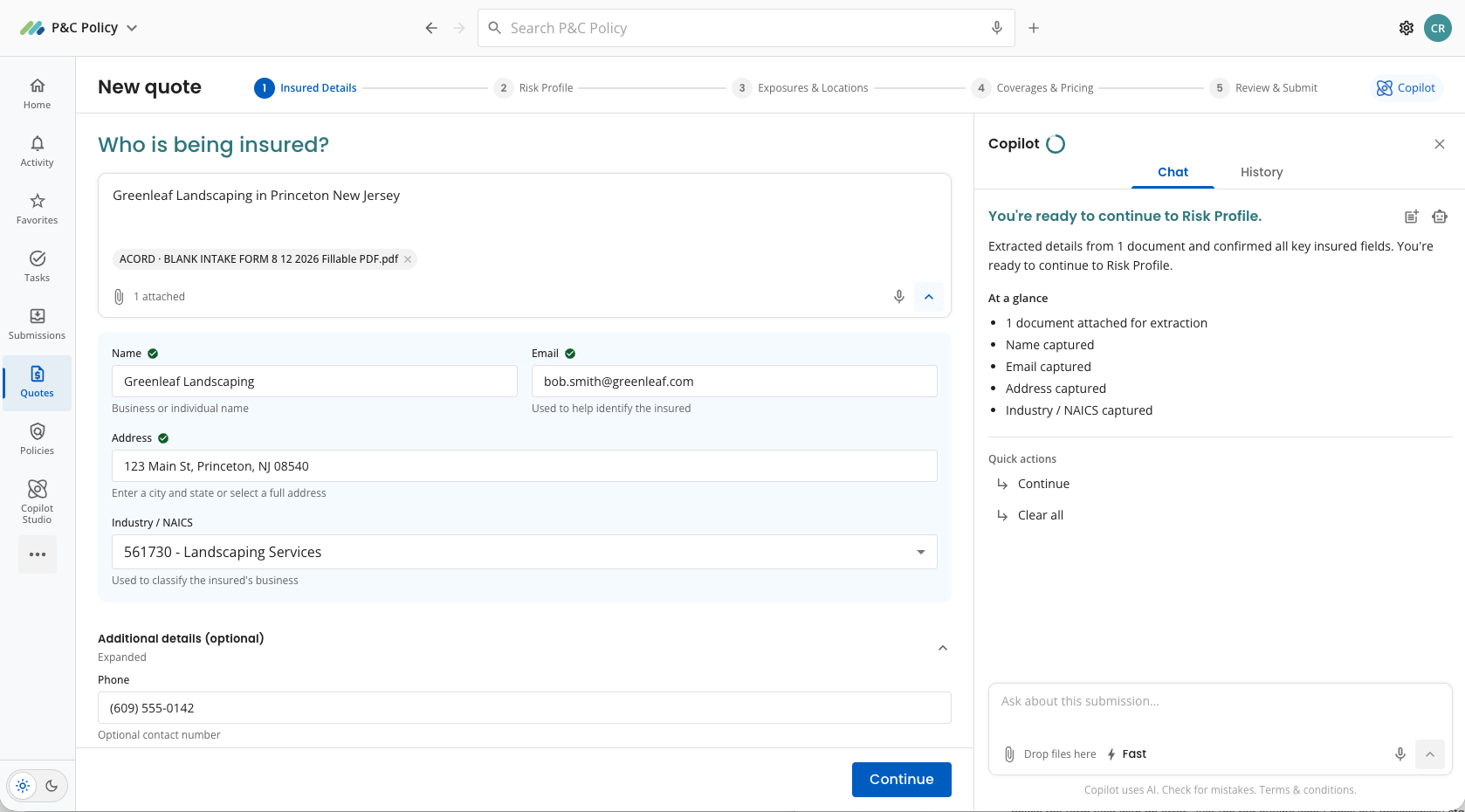
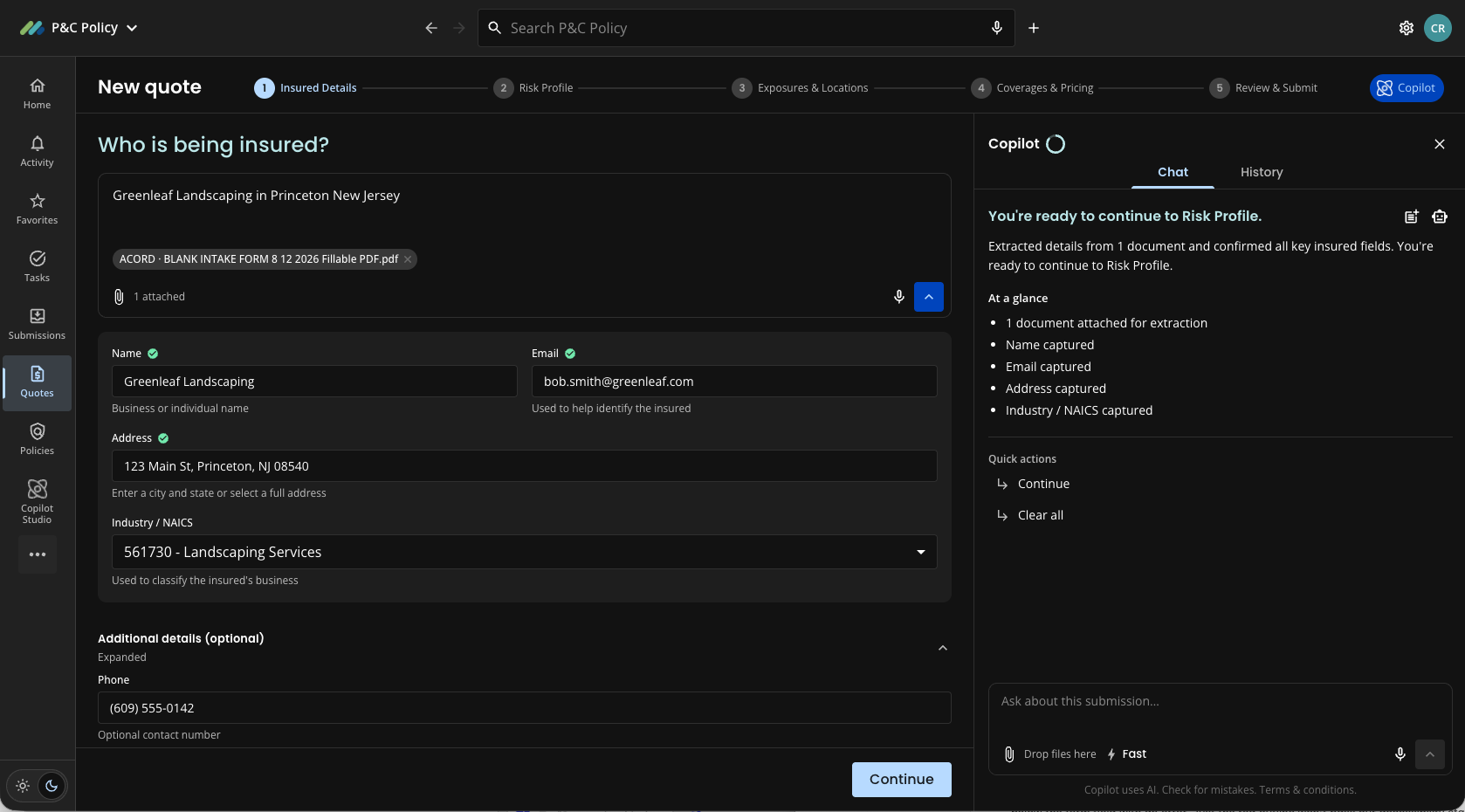
The 50/50 layout made Copilot obvious. It also turned resolution into a wizard. You left intake to go work with the assistant, then came back.
That was the wrong lesson. Underwriters want to stay in the submission. The gap has to be named on that record.
The later surface keeps intake full width. Blocked or Ready sits on the row. Open a blocked file and the issues are on that submission. Copilot attaches to the issue, you add the missing payroll or loss run, confidence updates, and the row can move. You never leave intake to walk a wizard.
50/50 is how we found the model. Staying in the submission is how it should be used.
Design principles and architectural decisions that enable AI-assisted underwriting workflows.
AI runs in the background. The underwriter does not “start automation.” They take the file when the model says it cannot.
The workflow moves when thresholds are met. Referral and missing data become explicit states instead of stalled forms.
Intake interpretation, readiness, and package shape are system output. Judgment stays with the underwriter.
Submission processing could be discussed as orchestration: queue, copilot, packages, and human review on one loop.
Lead Product Designer (Concept & Experience Architecture)
AI workflow architecture, submission orchestration model, underwriting experience strategy, and platform design alignment
Design lead managing 2 direct reports. Collaborated with Product and Engineering to explore AI-driven submission processing and underwriting workflow automation
Concept exploration → Fall 2026 product roadmap discussion