CASE STUDY
Traditional policy administration systems are typically organized around data structures and transactions, not the people performing the work.
This concept redesigns the platform around role-based operational workspaces, where each persona receives a tailored environment optimized for their responsibilities while operating within a unified system architecture.
The result is a platform that supports AI-assisted workflows, operational visibility, and coordinated collaboration across the insurance lifecycle.
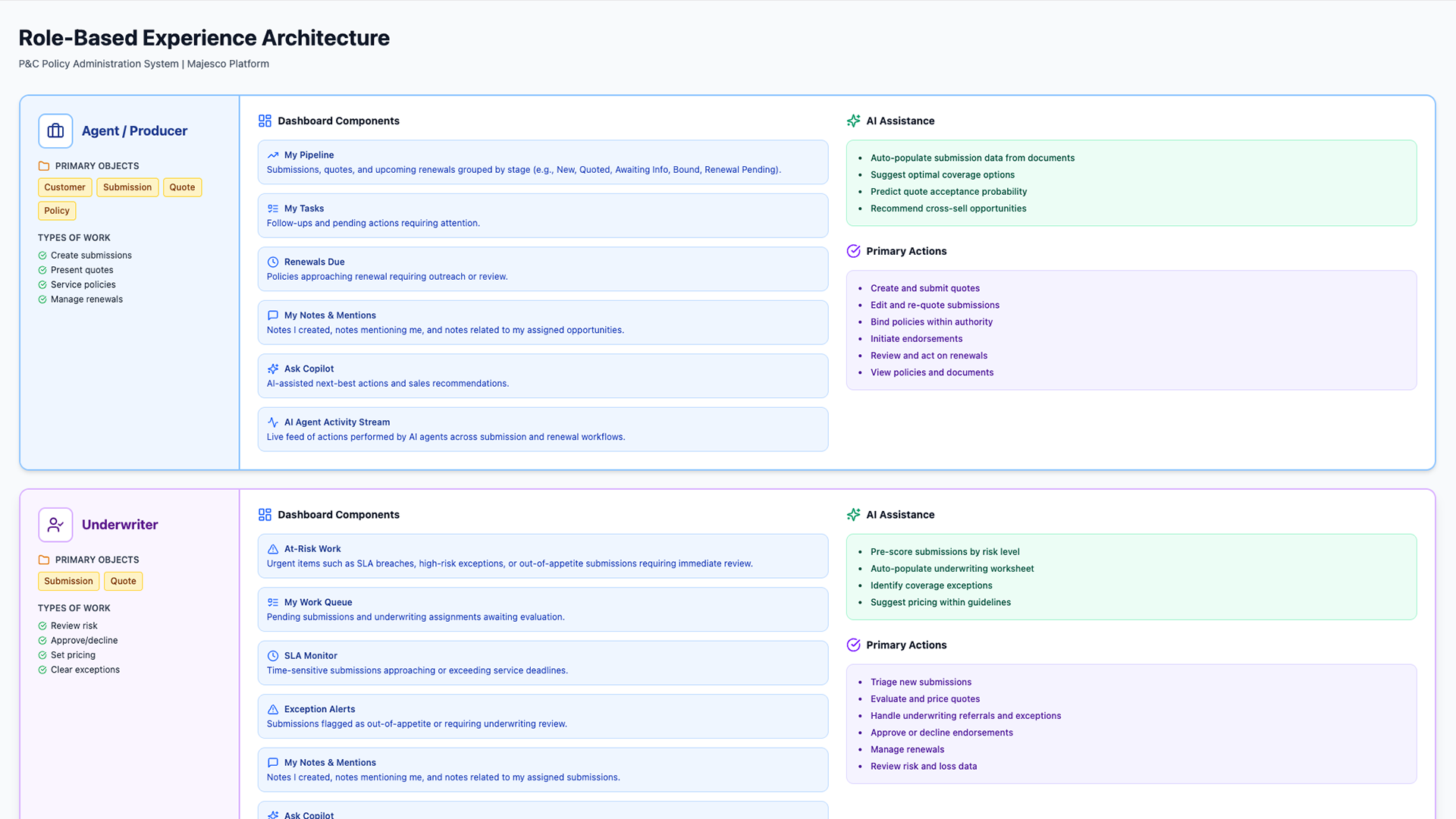
While automation exists, it typically focuses on isolated processes rather than improving how operational roles coordinate work across the platform.
As insurance operations scale, these inefficiencies compound, slowing decision-making across the entire organization.
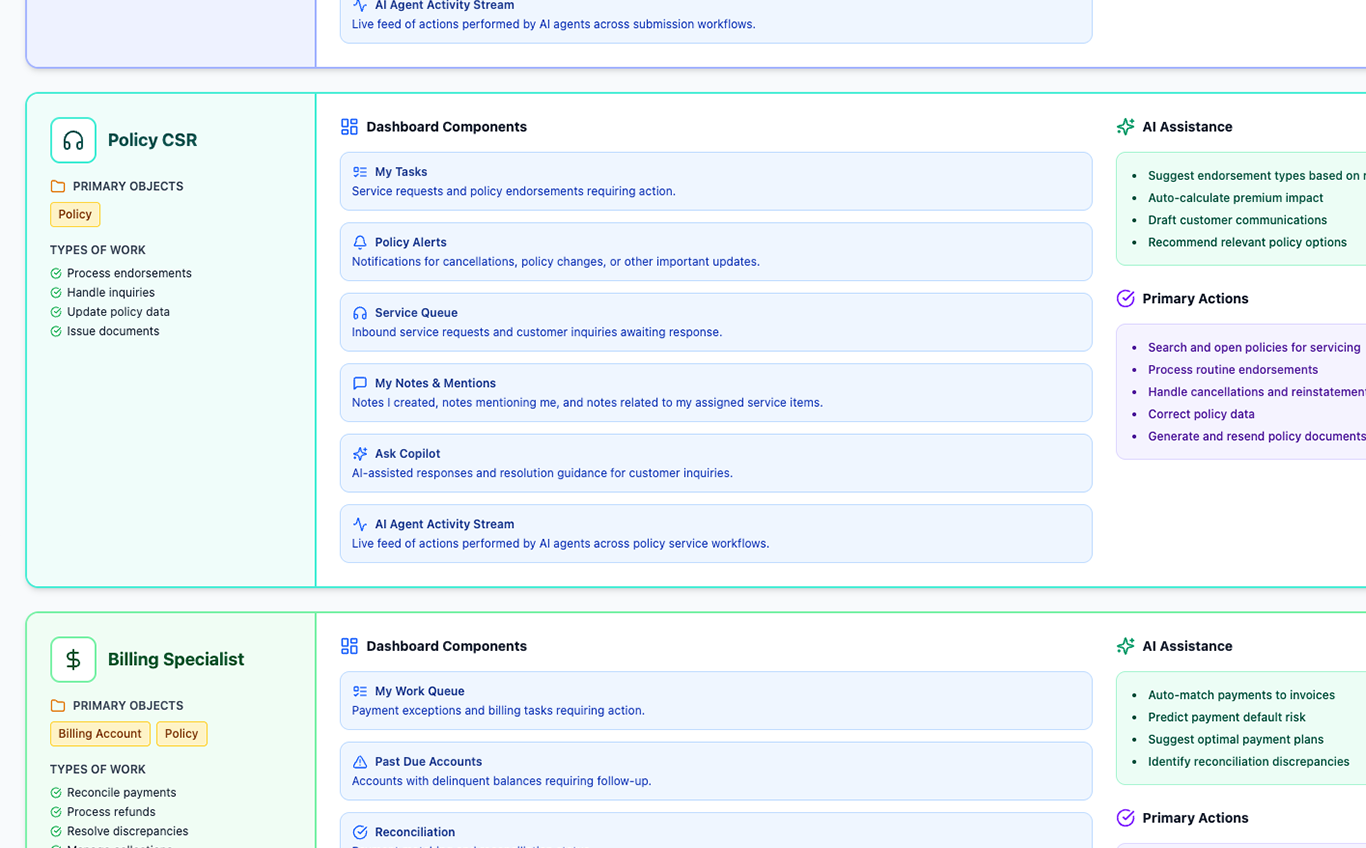
Instead of presenting a generic system interface, the platform introduces a role-based experience architecture where each persona receives:
The goal is to create a platform where every role operates within a purpose-built workspace while still sharing a unified system architecture.
The platform introduces a role-based experience architecture layered on top of the core policy administration system.
Dashboard Components
AI Assistance Layer
Primary Actions
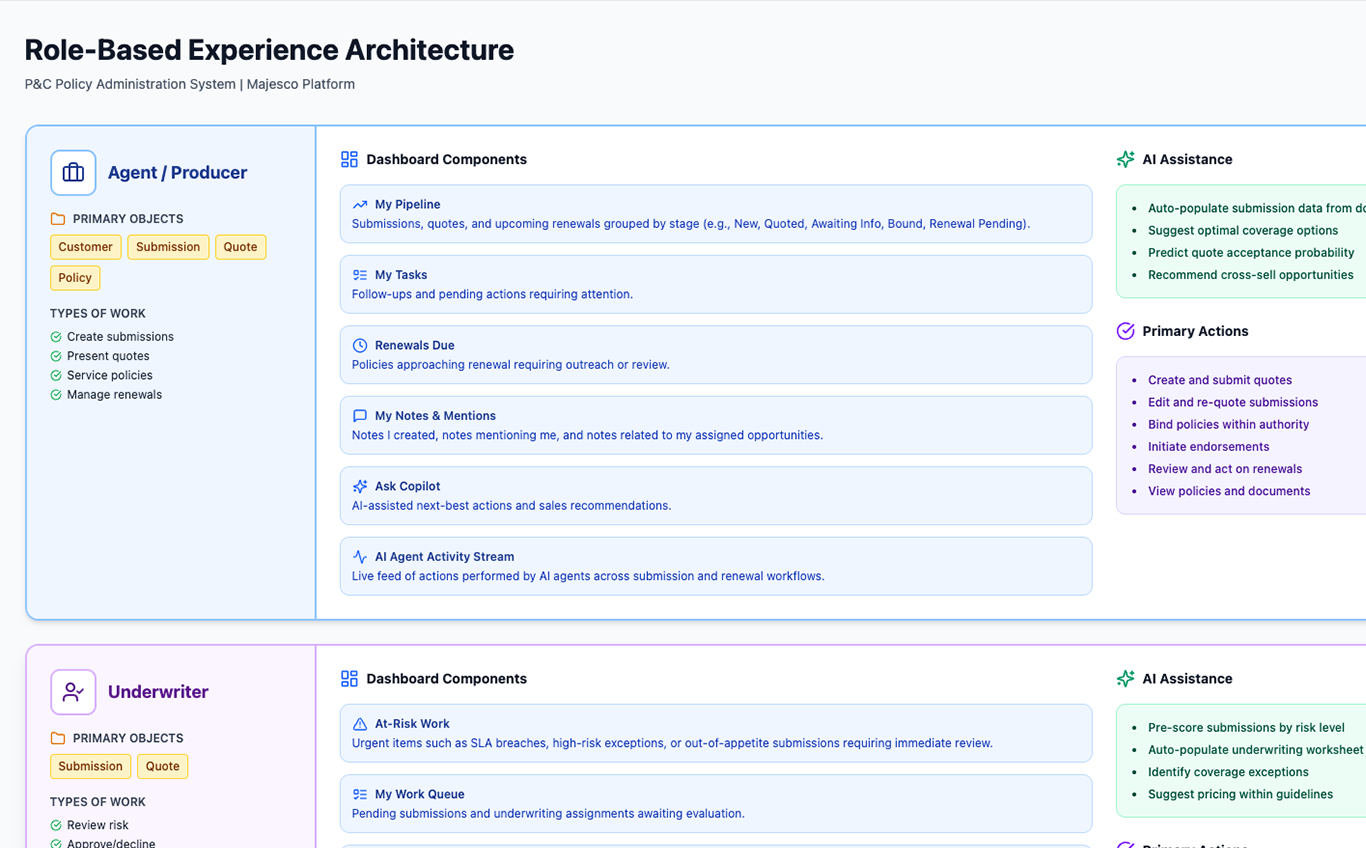
Design principles that organize insurance operations around role-based workspaces and AI-assisted workflows.
Workspaces tailored to operational roles
Workspaces operate within a shared architecture
Real-time visibility across the platform
Scale across additional insurance functions
Lead Product Designer (Concept & Experience Architecture)
AI workflow architecture, submission orchestration model, underwriting experience strategy, and platform design alignment
Collaborated with Product and Engineering to explore AI-driven submission processing and underwriting workflow automation
Concept exploration → Fall 2026 product roadmap discussion