
CASE STUDY
CICA Life’s onboarding system was fragmented, manual, and inefficient. I led the transformation of a 16-screen, 29-step workflow into a streamlined, automation-enabled 3-step configuration model. By embedding NIPR auto-fill and intelligent validation patterns, we dramatically reduced friction and repositioned onboarding as a scalable, competitive differentiator.
Carriers pursued cost reduction without automation.
Agents re-entered data already available through NIPR.
Licensing workflows lacked clarity.
Redundant steps compounded friction.
Efficiency was sacrificed at scale.
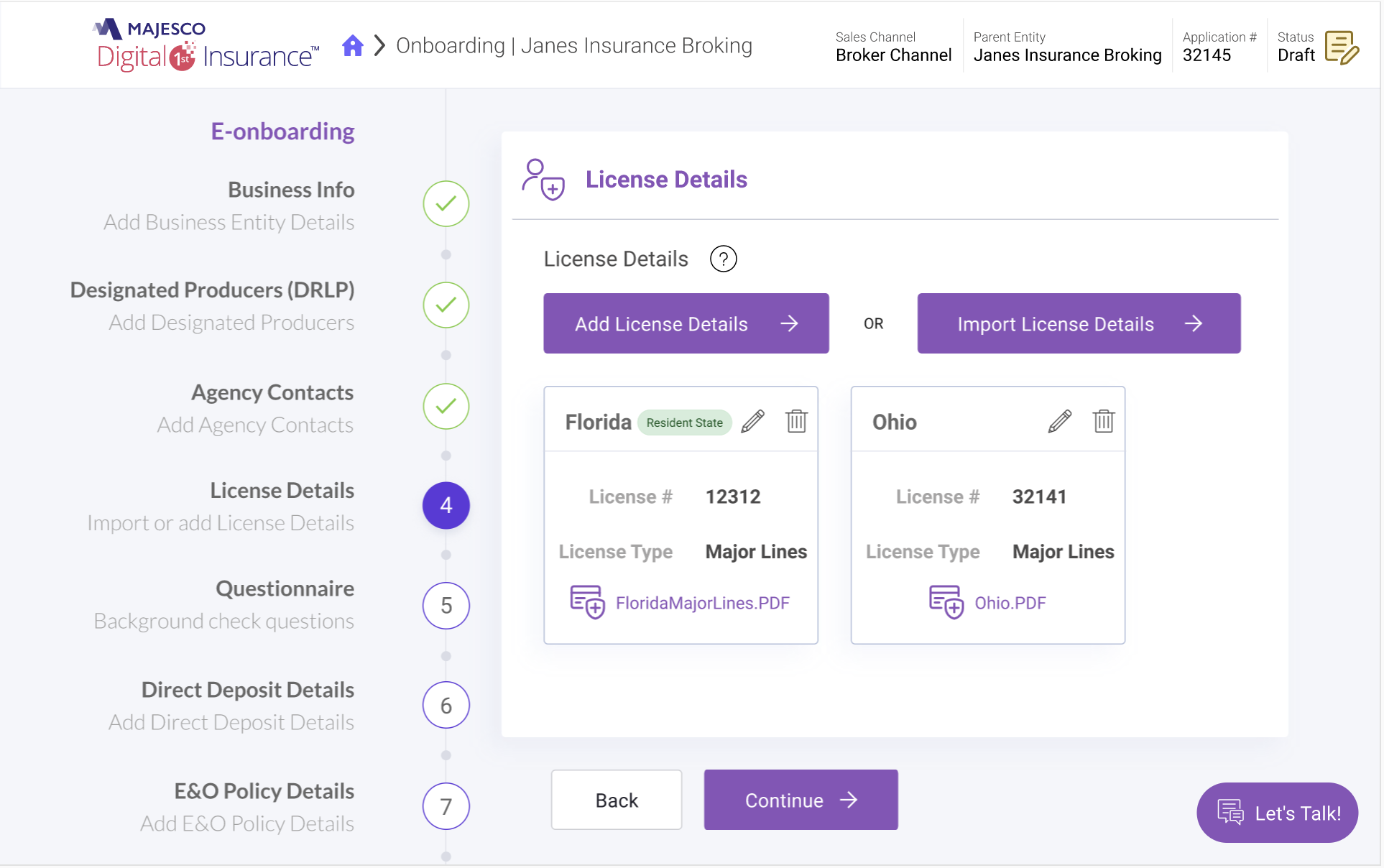
The original onboarding experience followed a rigid, step-by-step wizard structure. Each section operated independently, requiring users to manually complete and verify information without visibility into dependencies, conditional logic, or overall readiness.
Licensing, for example, required manual state-by-state entry or record imports — followed by document uploads and validation. While sequential, these tasks were not architected around operational phases, increasing cognitive load and introducing avoidable friction.
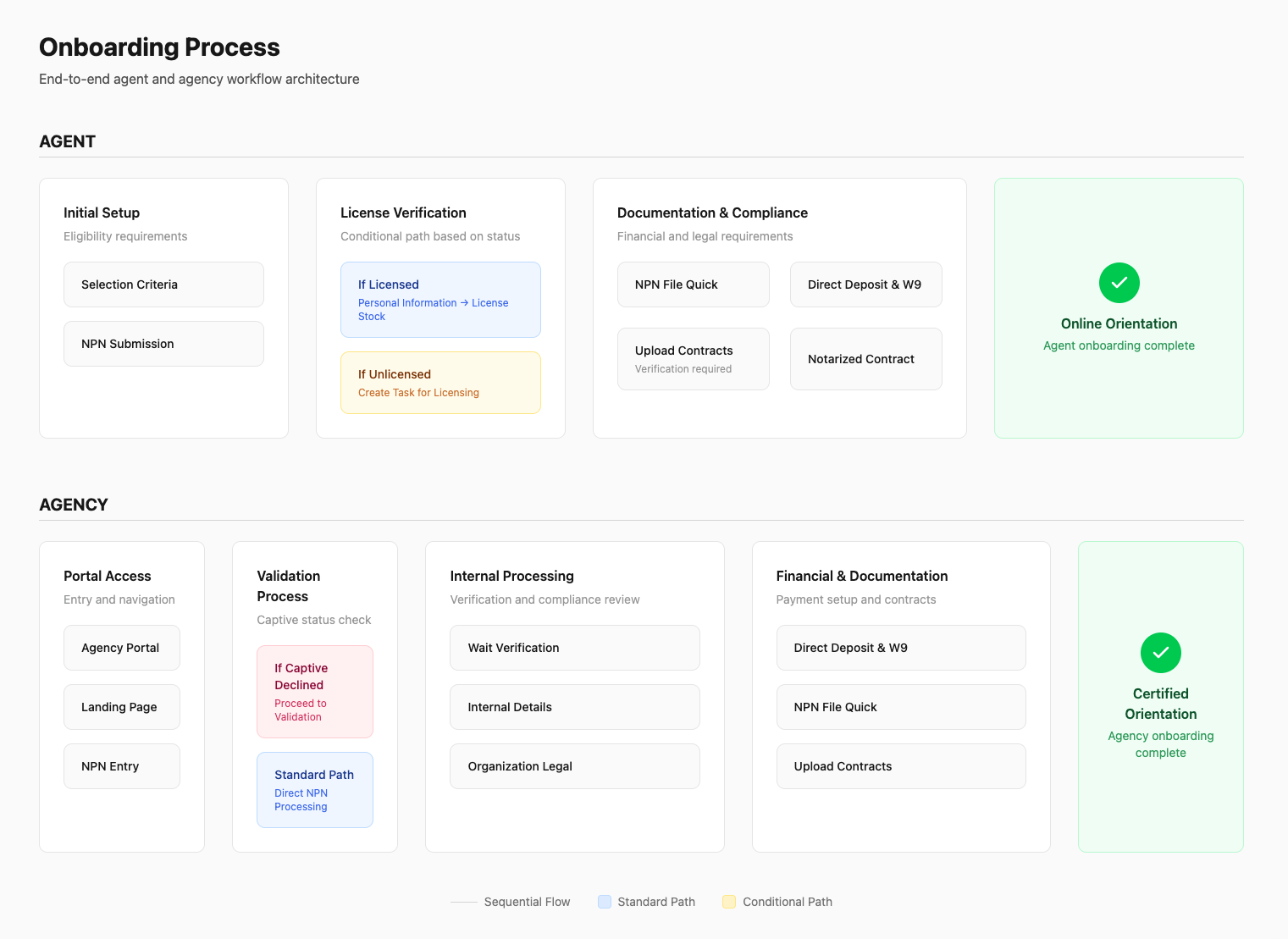
The redesign introduced a phase-based architecture aligned to how onboarding functions operationally — not simply how screens were sequenced.
The redesign introduced a phase-based architecture aligned to how onboarding actually functions:
Related actions were consolidated into structured phases, making state, dependencies, and conditional logic explicit. This reduced cognitive load, clarified decision points, and enabled automation to operate cleanly across agent and agency onboarding streams.
The result was a structured onboarding pipeline where state, dependencies, and completion were explicit — enabling automation and scalability across both agent and agency streams.
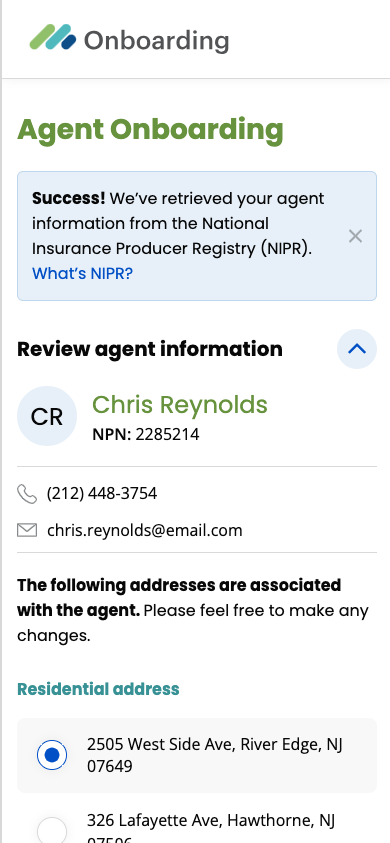
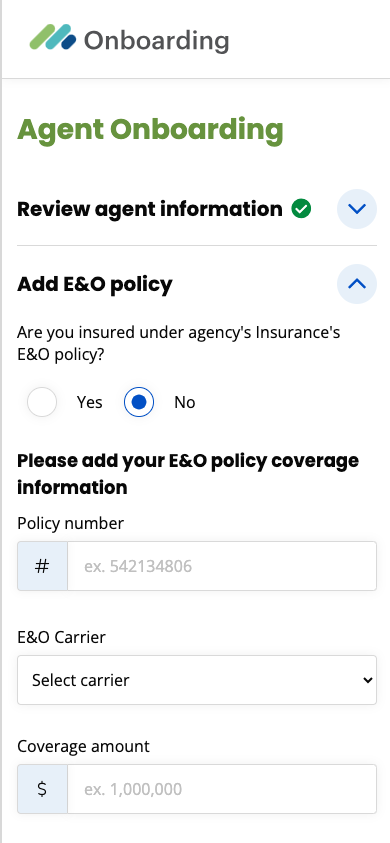
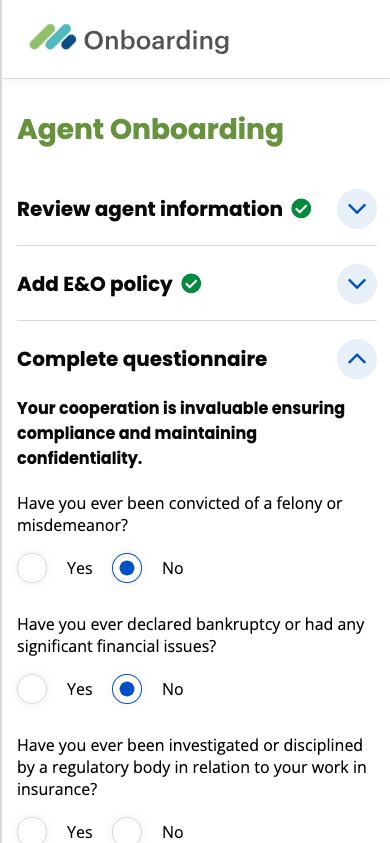
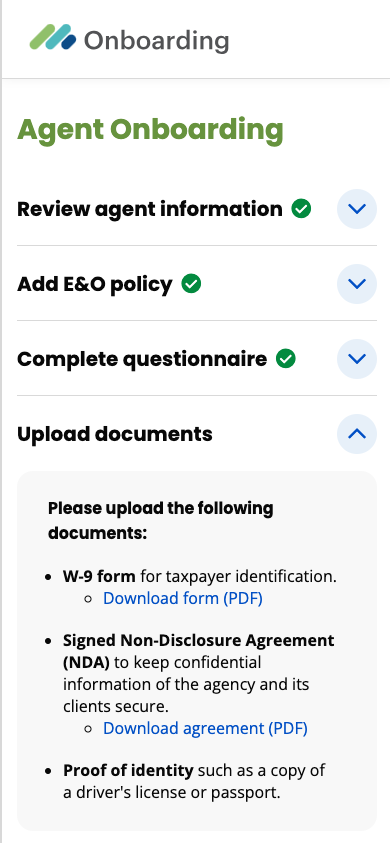
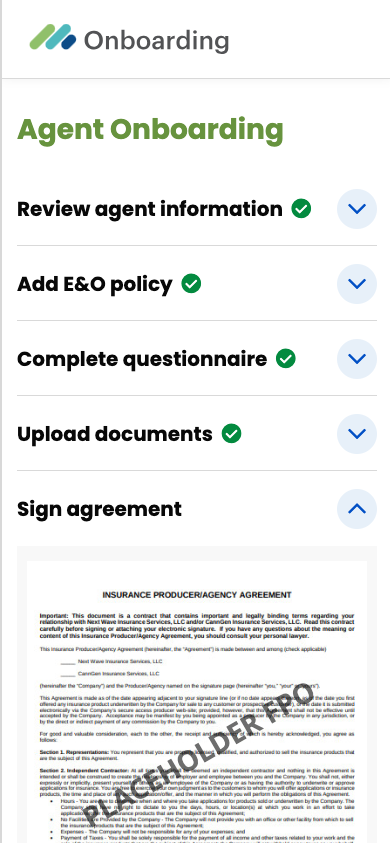
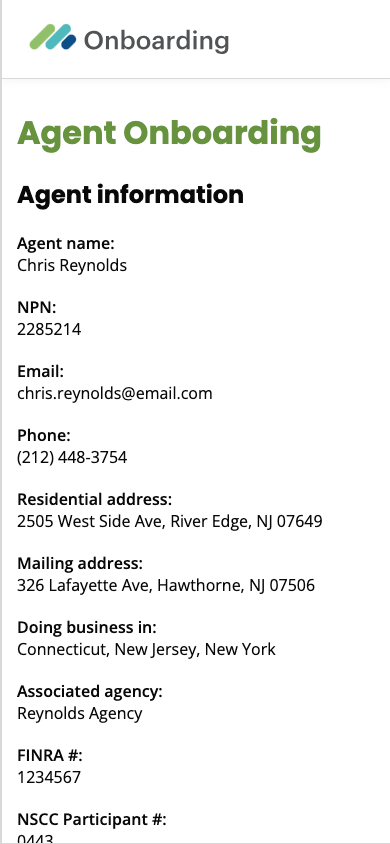

Agents in the field could complete licensing verification, compliance questionnaires, document uploads, and agreement execution directly from their phones without loss of clarity or functionality.
Design considerations:
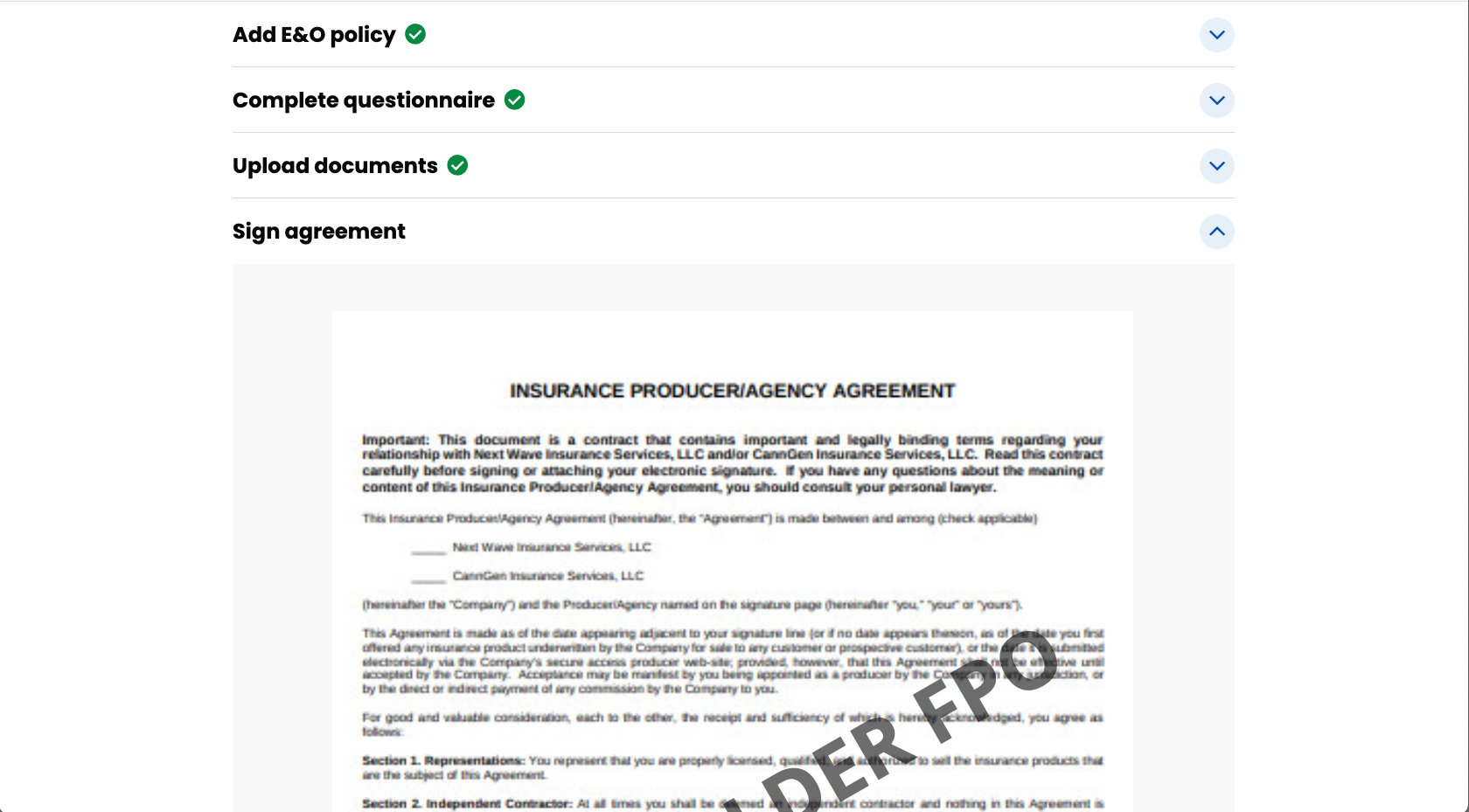
Rather than redirecting users to a new browser tab for signature, I led adoption of DocuSign’s newly released responsive SDK — embedding agreement execution directly within the onboarding flow.
This preserved context, reduced drop-off risk, and reinforced a unified system experience across desktop and mobile.
The redesign delivered measurable efficiency gains, enabled automation at scale, and strengthened competitive positioning across the onboarding platform.
Streamlined Workflow Architecture
Embedded & Scalable System Logic
Repositioned Onboarding as Growth Lever
Market-Level Validation
Principal-Level Lead Product Designer (Sole Design Owner)
Experience architecture, NIPR integration strategy, embedded eSignature implementation, and design system alignment
Partnered cross-functionally with Product, Distribution leadership, and engineering to define modernization strategy and drive rollout execution.
Concept → Production (Spring 2025)