CASE STUDY
I was asked to reimagine Majesco’s P&C Policy Administration platform and define how AI should function within it. Although AI capabilities existed, they were accessed through a separate copilot, limiting adoption. The goal was to embed intelligence directly into the core workflow.
Policy Details was the most used surface in the platform —
but it wasn’t built for decision-making.
It behaved like a transaction log, not an operational control center.
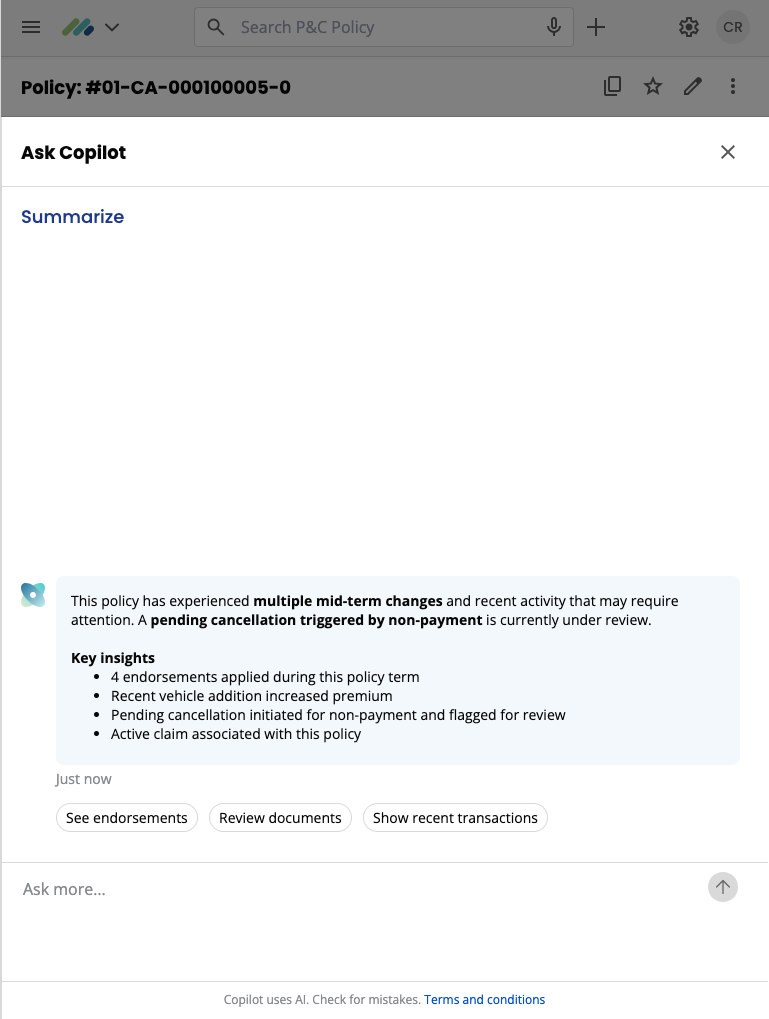
AI existed — but outside the workflow.
Activity was fragmented across tabs.
Risk and sequence were invisible at a glance.
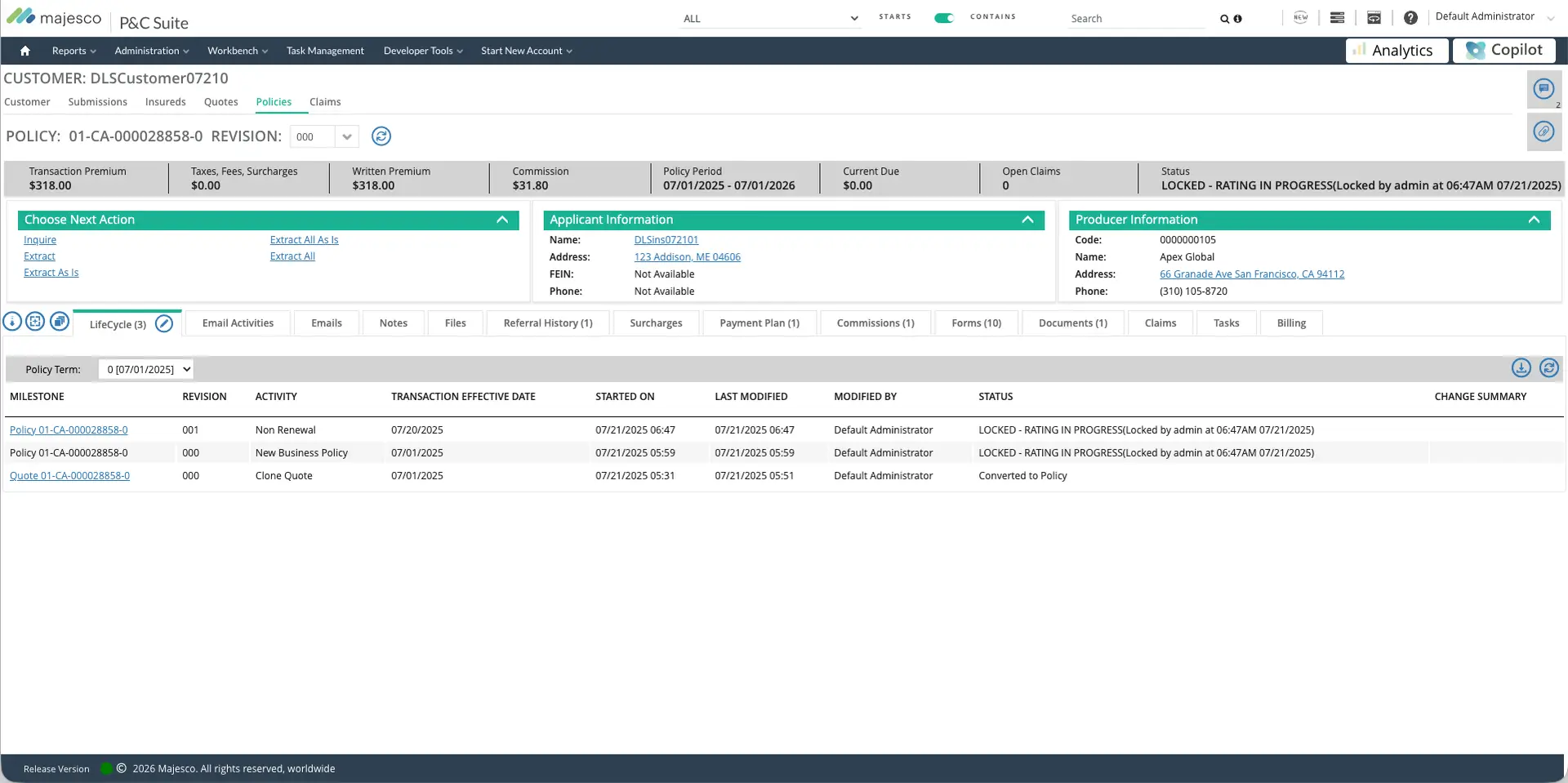
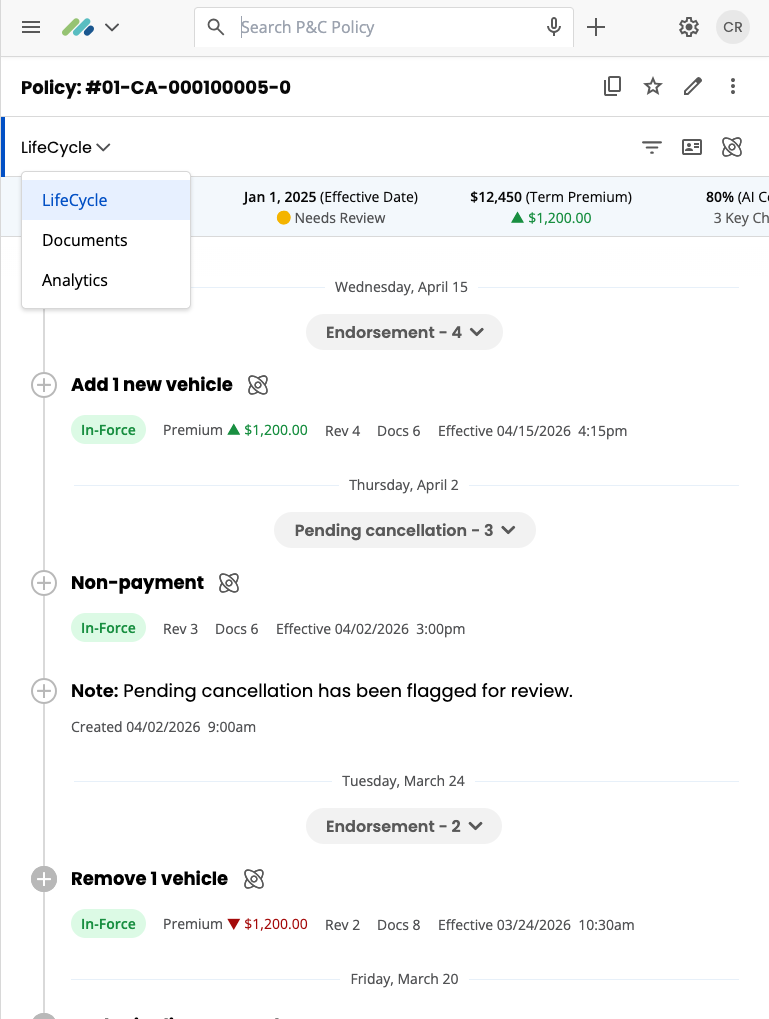
The legacy experience was organized around a tab-driven structure that distributed information across disconnected sections.
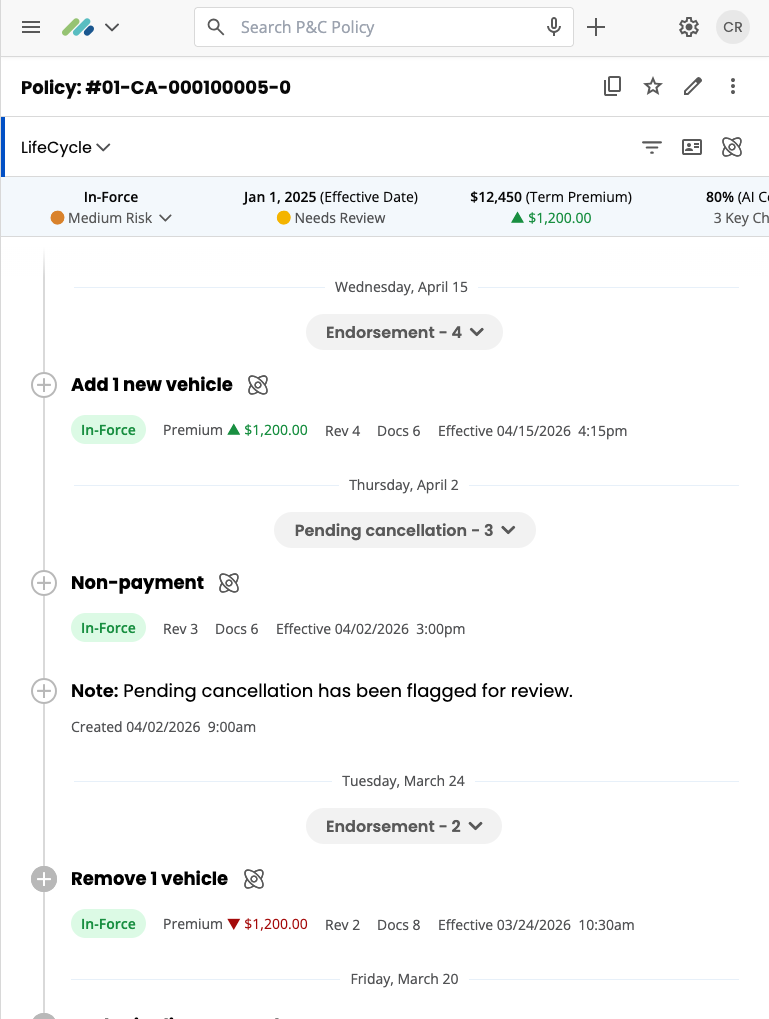
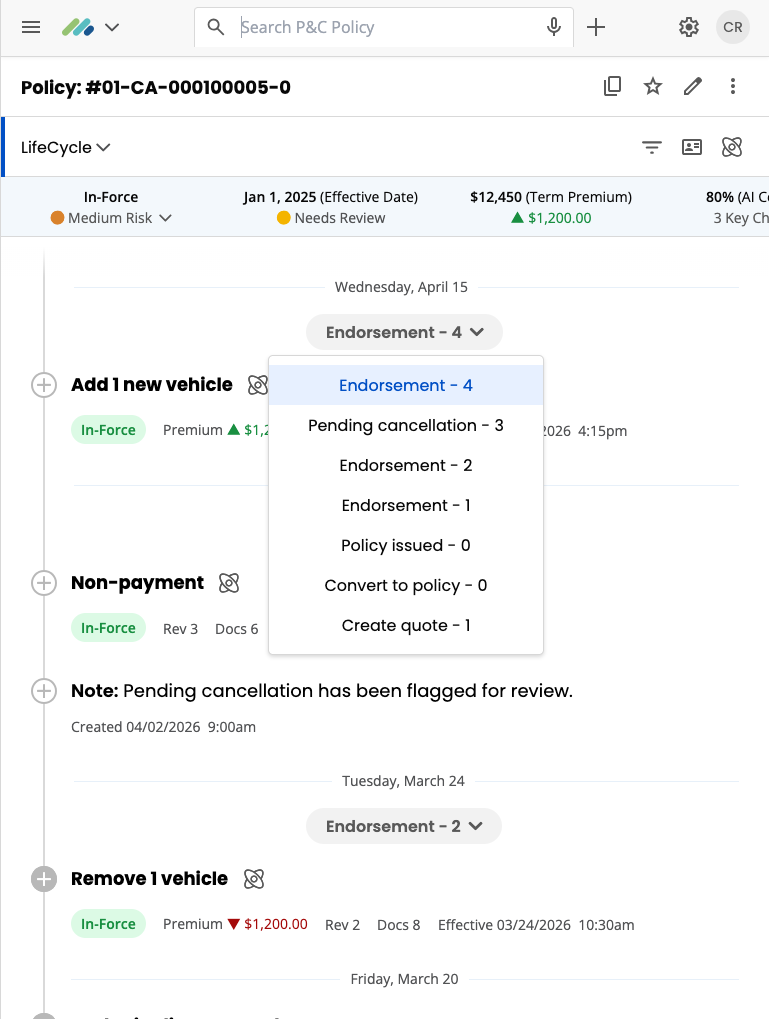
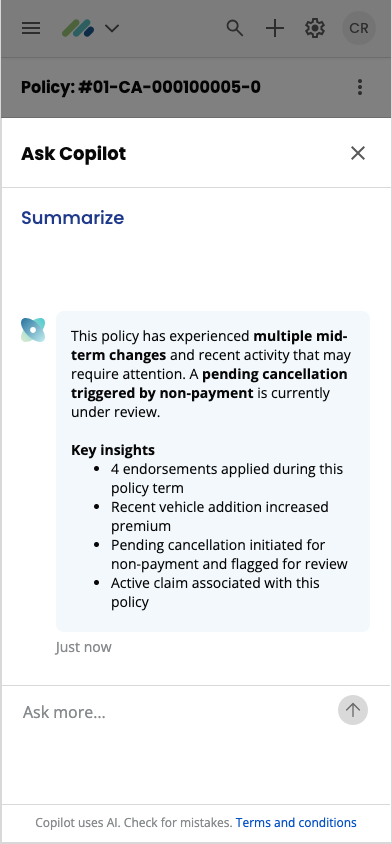
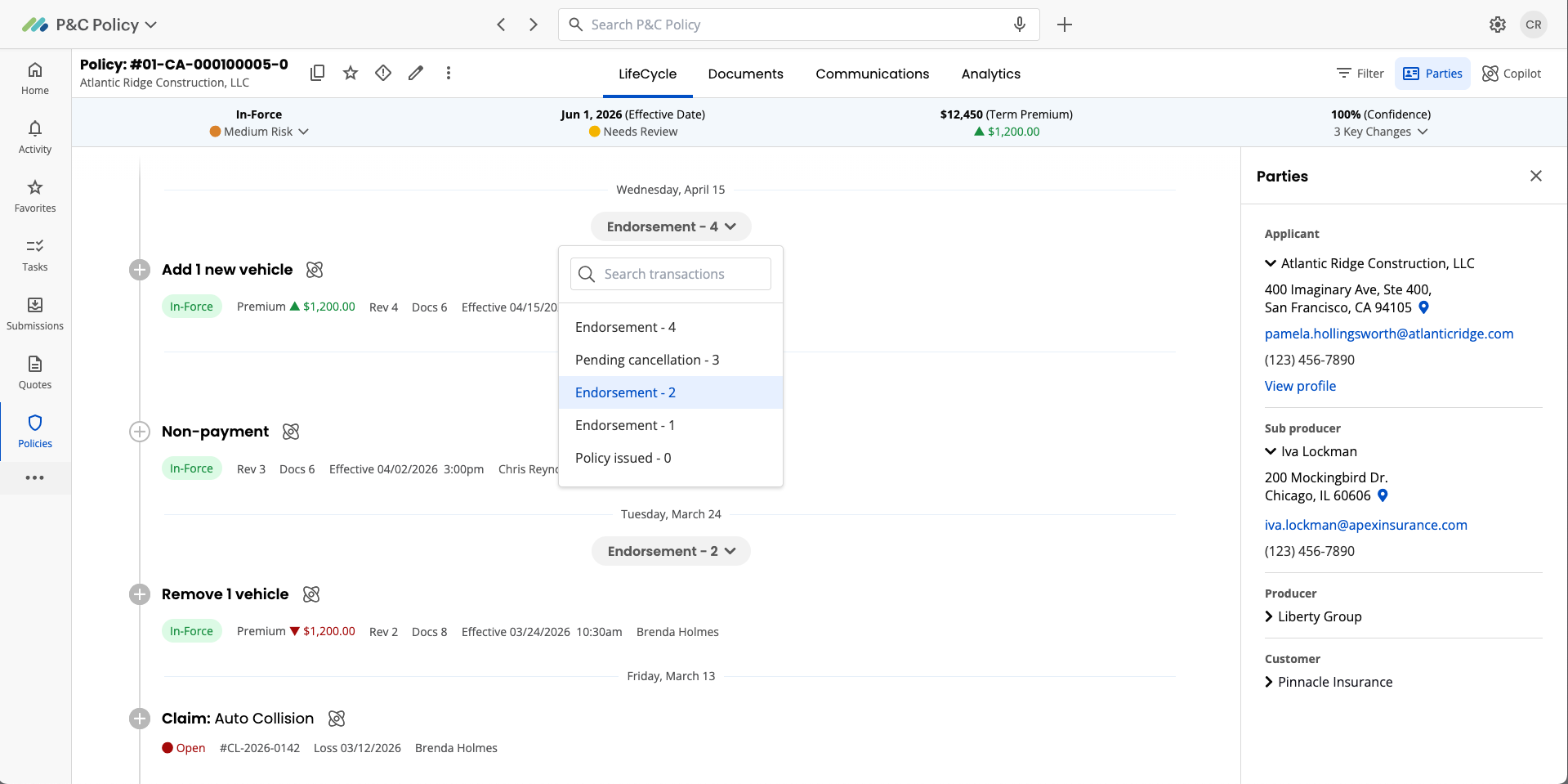
Instead of launching a separate copilot, intelligence appears directly within lifecycle events — where users are already reviewing changes, evaluating risk, or making decisions.
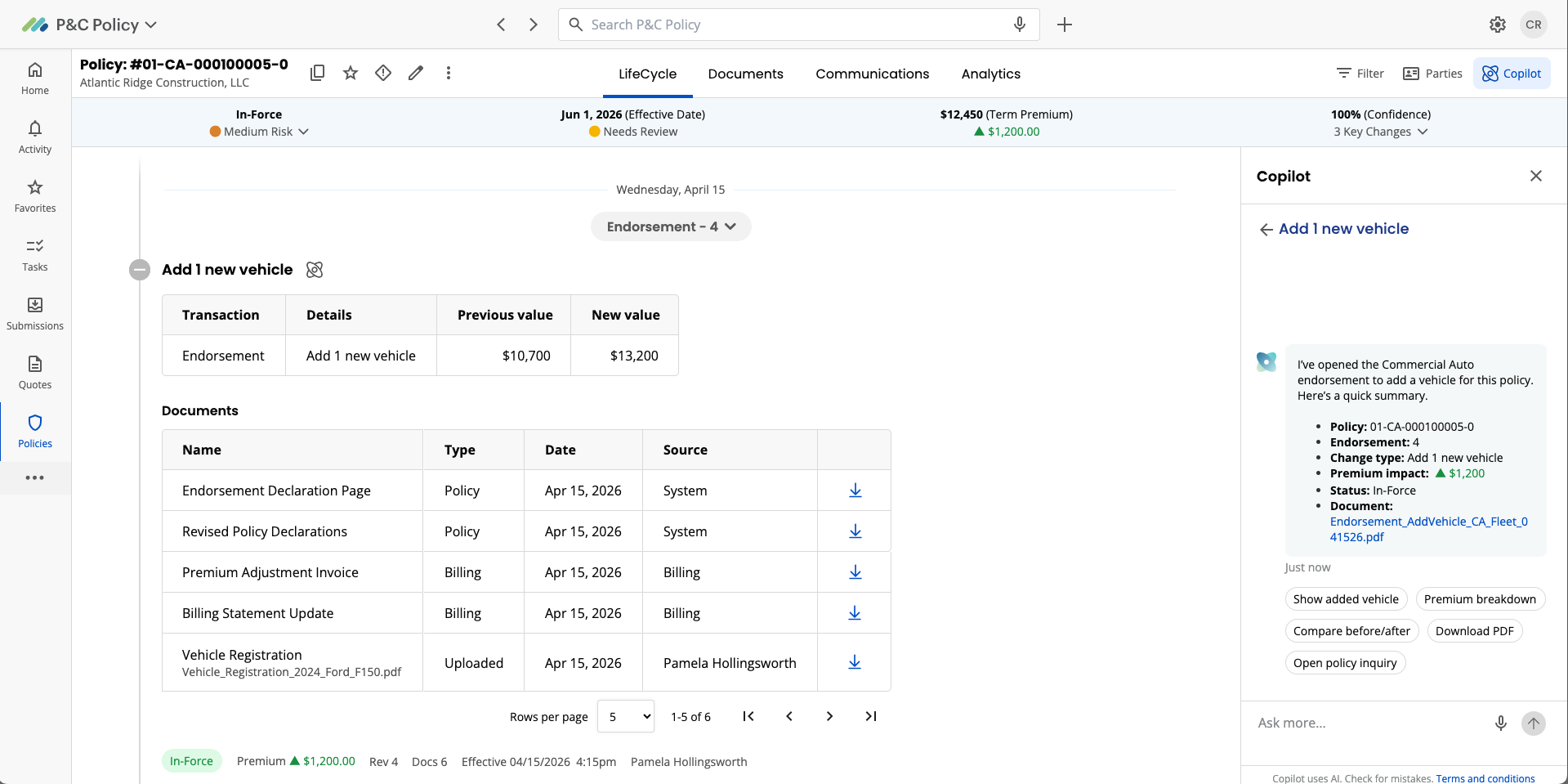
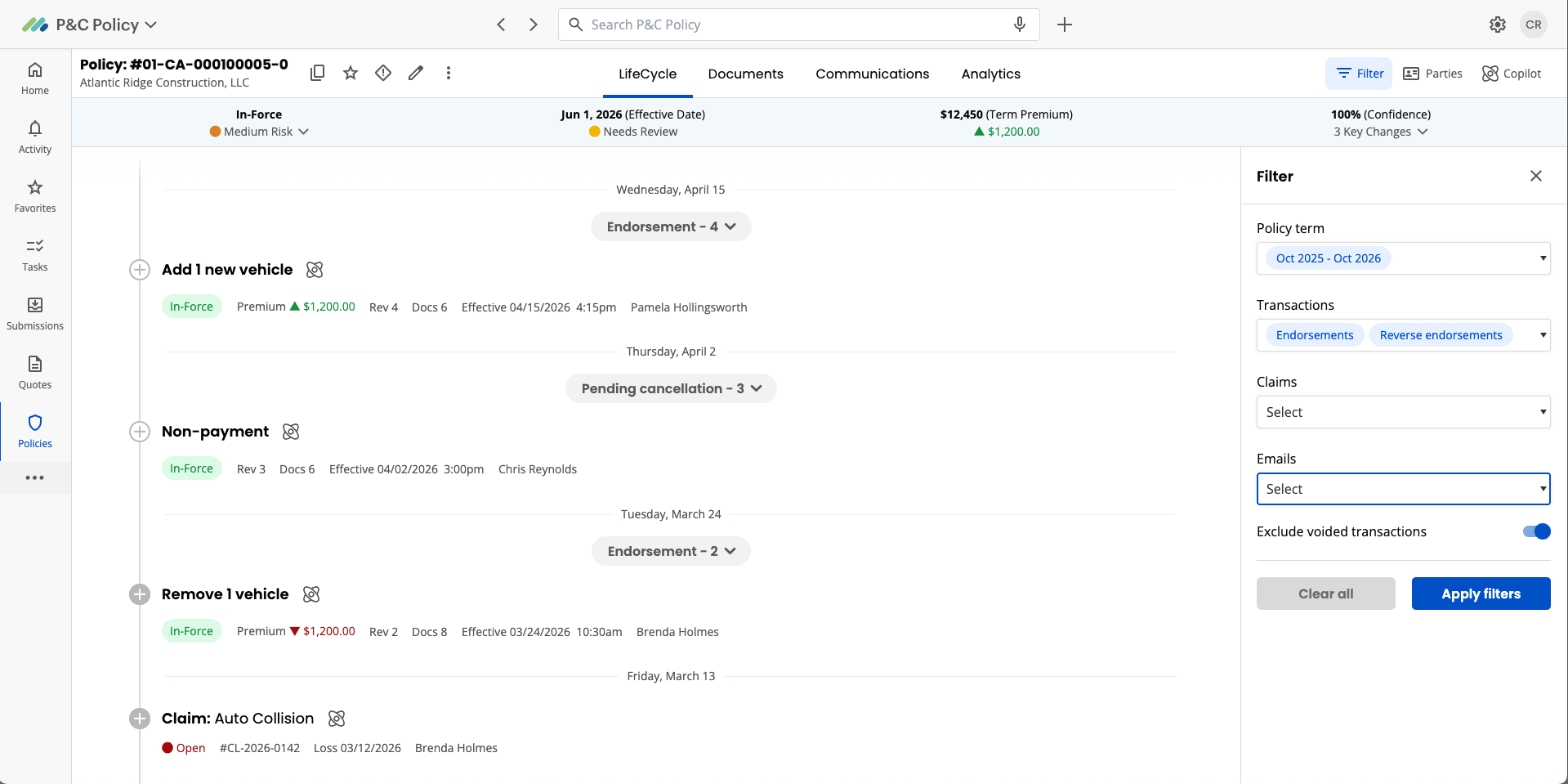
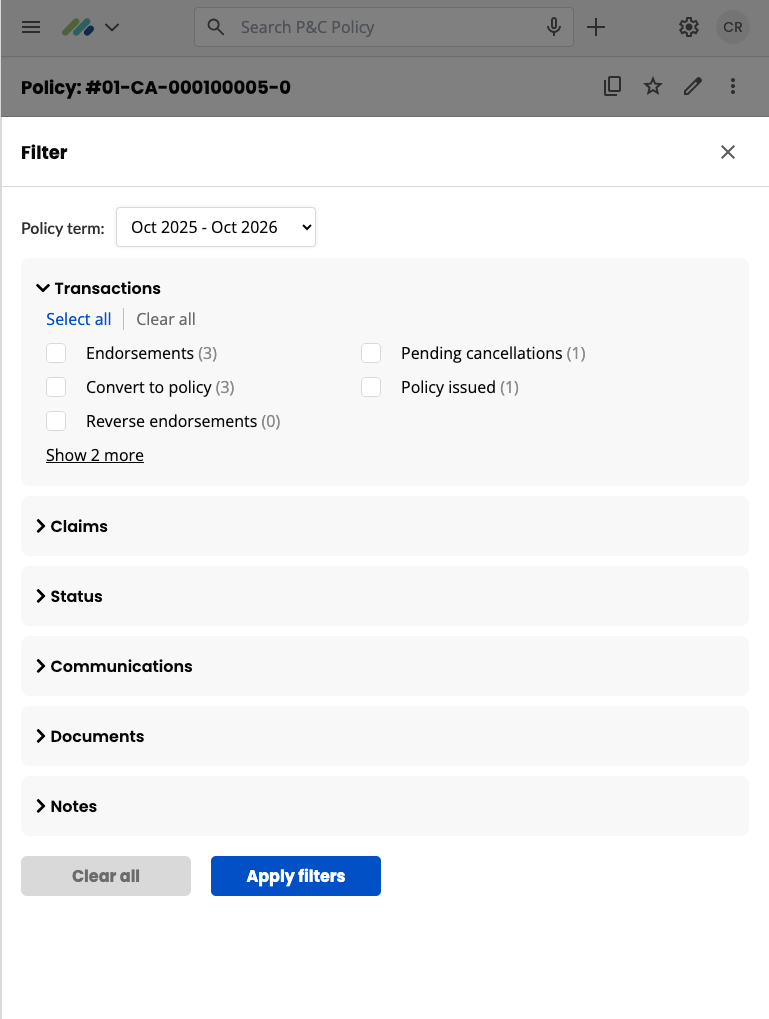
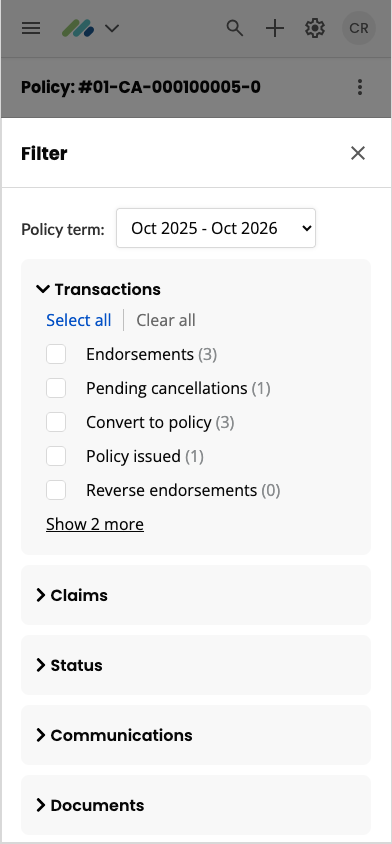
Live client sessions surfaced friction in filtering and quick-access workflows.
Rather than refine visuals, I restructured the filtering model to better reflect how users evaluate lifecycle activity.
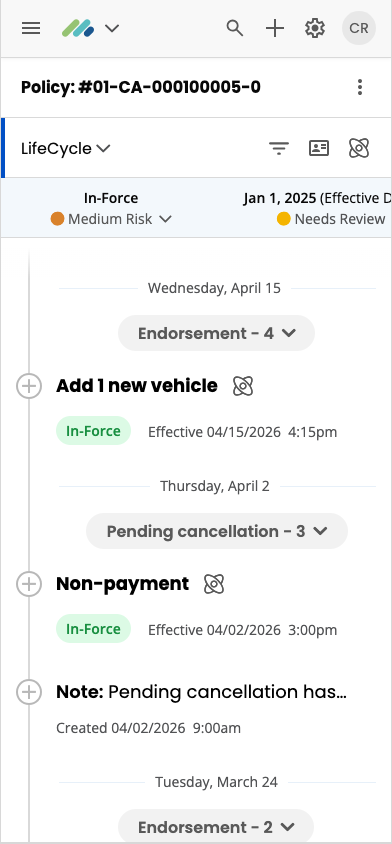
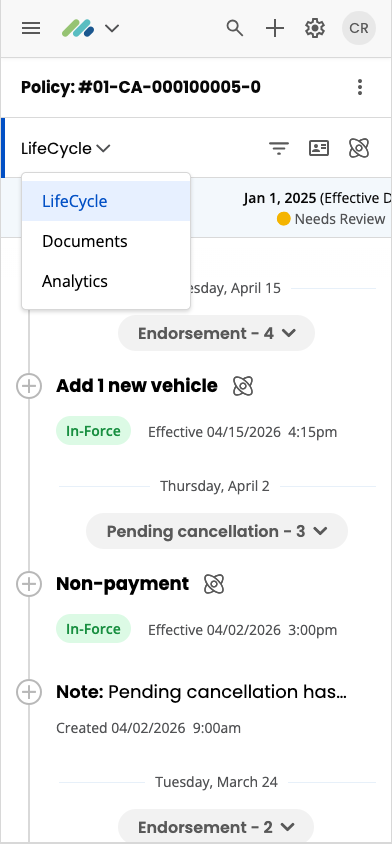
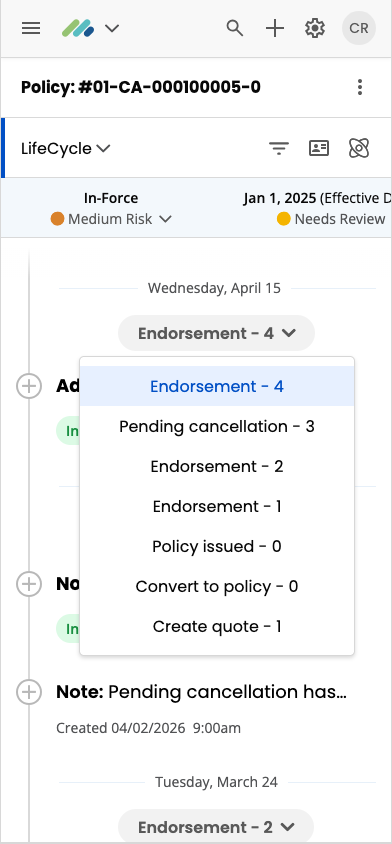
The Policy Details experience adapts seamlessly across desktop, tablet, and mobile while maintaining a consistent interaction model.
Users can review lifecycle events, access key details, and take action from any device without losing context or clarity.
Design considerations:
From the outset, this redesign was treated as a platform system, not a one-off UI refresh.
This enabled leadership to extend the design beyond P&C as a unifying direction across product lines.
The experience was delivered as a tokenized Figma system mapped directly to Material UI and Angular Material.

While formal usability testing and production analytics are planned for the next phase, early validation has been strong across executive leadership, product teams, and client audiences. The redesign has been designated a strategic “Big Bet” for 2026 platform evolution.
Adopted as Forward Platform Model
Positioned as Differentiated Modernization Strategy
Influenced Cross-Team Product Thinking
Defined Leading Indicators for Platform Evolution
Lead Product Designer (Principal-Level Ownership)
Experience architecture, lifecycle modeling, AI integration strategy, design system alignment
Design lead managing 2 direct reports; partnered with product and engineering (Angular / MUI)
Concept → Fall 2026 planned release